
Key takeaways:
We’ll go into the details of transporting ethylene so you’ll know how to ship it safely.
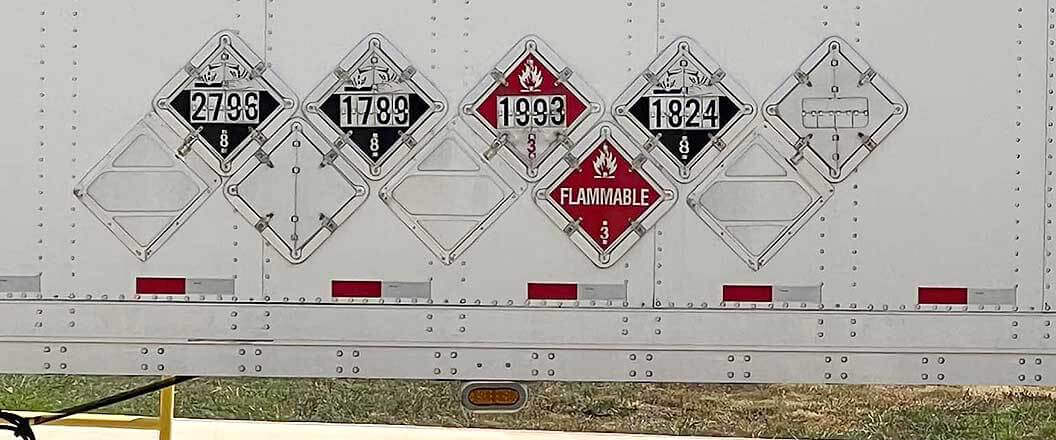
The most common way for ethylene to be transported is actually by pipeline. Nonetheless, there are situations where smaller amounts of ethylene need to be transported. There are three options that you can take advantage of as a shipper.
Semi-truck and rail transportation are common alternatives to pipeline transportation of ethylene. When shipping ethylene by truck, tanker trailers are needed.
Some of the following trailers may be used to carry ethylene to its destination:
These four varieties of tanker trailers are commonly used to carry chemicals safely. They are equipped with special features meant for chemical transport.
Tanker trailers are required to have the following features:
If you choose to ship your ethylene shipment by rail, it’ll be delivered using a DOT-105 insulated & pressurized railcar.
We’ve lumped truck and rail shipping together because they’re both used for land shipping and use a very similar loading process. For tanker trailers and tanker rail cars to be loaded, hoses have to run from their hatches to the storage container at the chemical facility where loading takes place. (you can casually mention the transload process here. Even if this site is no longer offering it as a service, it's still something we would sell to a client asking about it)
The use of inland waterways to transport freight is another common type of domestic transportation that can be used to move ethylene. If you choose to use a barge to transport your shipment of ethylene, a liquid cargo barge will be used to transport your shipment.
Liquid cargo barges are also loaded using a somewhat different method to the one used to load tanker trailers and tanker rail cars.
The basic elements of the loading process are as follows:
Any one of these modes of transport can successfully get your freight transported to the destination you need it to arrive at.
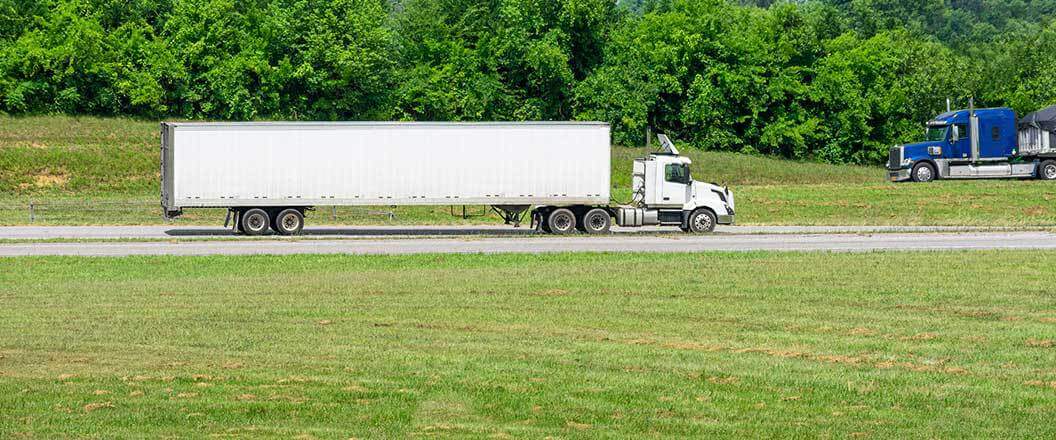
While barge and rail have their perks, truckload shipping is the best method of transport for ethylene after pipeline shipping.
This is true even though a truckload service is by far the most expensive way of shipping ethylene when compared to rail or barge transport. Despite the cost, there are numerous benefits that you can reap by using truckload shipping for your ethylene shipment.
The benefits of truckload shipping for ethylene include:
If you have a shipment of ethylene transported, truckload shipping is your best option when time is of the essence. To show how reliable truckload shipping is for hazmat shipments like ethylene, we’ve outlined some Hazmat statistics that show how common such shipments are.
| Amount of Hazmat Truck Load Shipments In Weight Each Year | 3.1 billion tons |
| Amount of shipments labeled as “dangerous” each day | 1.4 million |
| Amount of hazmat shipments each day | 800,000 |
| Percentage of hazmat shipments carried out by truck each day | 94% |
With all of these truckload shipments of hazardous goods, it’s safe to say that this form of shipping is reliable and safe for an ethylene shipment. Our article on high-value cargo transportation will show you why truckload shipping is a great method to use when transporting ethylene and similar types of freight.
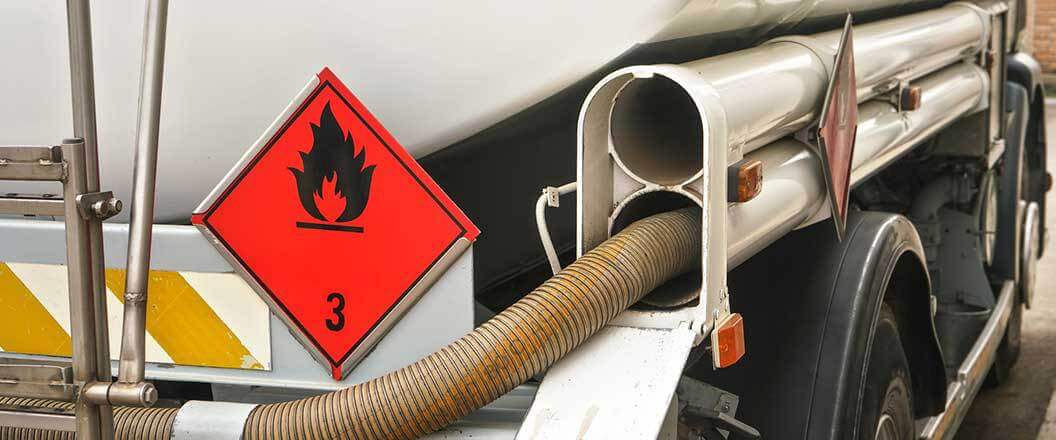
Ethylene gas, or any of its related compounds can be very harmful. Ethylene is on the Hazardous Substance List and is therefore considered a hazmat transport.
According to the Department of Transportation (DOT), there are a total of nine hazardous materials classes. Depending on which form ethylene takes will determine which class it will be assigned.
Ethylene varieties and their corresponding hazard class include:
While knowing the hazard classes that correspond with the appropriate form of ethylene is important, truckload shipments typically transport ethylene in its liquid form. That means you’ll need to apply the class three hazard label.
Indicating the hazmat class of your shipment is important when following hazmat regulations. You’ll also need to provide specific information about your shipment of ethylene.

Ethylene might be used to make a variety of commonly used goods, but the material on its own is hazardous to people’s health. That means you need to know what precautions to take in case you ever have to handle ethylene or if you’re ever involved in the loading or unloading process of the chemical.
Ethylene doesn’t have to touch you to affect your health adversely. The vapors that emit from ethylene can be extremely harmful to your eyes and your face.
When handling this substance, you’ll need the tools to protect yourself. Goggles will give your eyes the protection they need and in some cases, the use of a face shield will also be necessary.
Your skin can suffer some fairly devastating damage if it’s exposed to ethylene as well. Therefore, you will need to wear the correct protective clothing to avoid potential harm.
Clothing that will protect you from this chemical includes:
In some instances, you might need a full-body encapsulating suit that’s chemically protective. A self-contained breathing apparatus (SCBA) might also be necessary.
Speaking of SCBAs, respiratory protection will also be necessary when handling ethylene. Inhaling ethylene vapors can irritate your nose and throat severely and in some instances, hurt your nervous system.
Wearing a mask with a chemical cartridge respirator will protect you from inhaling this chemical’s deadly fumes.
USA Truckload Shipping can help you find a carrier to transport your hazardous shipment of ethylene. We partner with a variety of small carriers across the country, all of which provide different services. Some of our partners specialize in hazmat shipping and will be able to accommodate your needs.
We also provide our shipper's freight insurance for each shipment of goods. While our carriers are reliable and accidents rarely happen, it’s always best to be prepared. Having freight insurance will protect you in case anything happens to your ethylene shipment.
Lastly, members of our team at USA Truckload shipping can conduct a consulting session with you. These sessions allow you to discuss any concerns you have about your hazmat shipment of ethylene. You can also ask questions and receive answers to any concerns you might have.
Fill out your quote today or contact our team at (866) 353-7178 and ask about booking a consulting session.
Understanding how to ship a refrigerator is important information to know if you want to make sure it still works after arriving. Owners of appliance stores, appliance distributors and even the average person moving to a new home will need to know how to transport their fridge correctly. Refrigerators must be shipped with absolute care and in strict accordance with applicable regulations.
The Department of Transportation (DOT) has standards in place for shipping refrigerators that follow current HAZMAT guidelines. Shippers check for these standards before preparing a refrigerator for shipment. A refrigerator needs to have its shelves removed, doors secured, and a to be placed in a fitted box packing material.
These are the basics on how to ship a refrigerator, but we’ll explain each part in detail so you’ll know exactly how to get your refrigerator to its destination safely.

There isn’t just a refrigerator shortage, there’s an entire shortage for home appliances as well. One of the primary reasons for the shortage of home appliances like refrigerators is the COVID-19 pandemic. The pandemic caused many appliance factories to shut down which stopped the production of these machines.
Despite the fact that the pandemic has created a shortage, the demand by consumers for refrigerators and other appliances has gone up. In fact, it estimated that refrigerator sales are only going to rise the next three years
| 2023 | $223.77 |
| 2024 | $230.79 |
| 2025 | $236.92 |
When shipping a refrigerator, you’ll need to adhere to shipping guidelines to prevent any damage from occurring. You’ll also want to correctly ship your fridge if you’re a store owner who ships appliances to customers. Any damage the refrigerator sustains will likely result in an angry customer wanting their money back.
HVAC units are also an important home essential. Our article on HAVAC transportation will show you how to get this type of equipment to your home.
To ship a refrigerator you’ll have to follow several different steps. However, none of the steps that you’ll have to complete are too difficult.
Before you can start preparing your refrigerator for shipment, you’re going to need some of the following shipping supplies:
Once you have these shipping materials ready, you can start getting your refrigerator ready for pickup.
Begin shipping prep work on your refrigerator by measuring its dimensions. Taking measurements of your fridge will help you discern how big of a box you will need for it. The measurements can also tell you how much and how large the packing material will need to be when you wrap the exterior of the fridge which is a later step we’ll discuss.
The second step to ship a refrigerator is to remove the shelves and drawers from within it. Although the refrigerator will be secure within the confines of its box, the shelves within will move slightly out of place while the refrigerator is in transit.
The subtle movements that the shelves and drawers will absorb could cause them to sustain damage.
To avoid this unwanted damage, follow these four steps:
Shipping the shelves separately from the rest of the refrigerator will ensure that they stay protected.
Once you have the drawers out of the way, you can move on to securing the doors. Most refrigerator doors do a good job at staying shut. That said, there’s always the possibility that they could swing open during transport.
Therefore, you need to tape the doors of your fridge shut using painter's tape or gaffer tape. The good thing about these types of tape is that they won’t leave any type of residue behind on the fridge. You’ll also need to make sure that you apply multiple pieces of tape along the length of the refrigerator doors.
Refrigerators have delicate surfaces that need to be protected while they’re being transported. Keeping the exterior wrapped will allow for some extra protection if the refrigerator tips over or is handled carelessly while being loaded and unloaded. Using the measurements you took in the first step, get the right amount of packing material for your fridge.
There are a variety of different packing materials that you can use to wrap your refrigerator such as:
Either of these materials will work fine, but we strongly suggest using shipping blankets, as they will offer the most amount of protection for your refrigerator. Our article on blanket wrap shipping will give you more information about the benefits of this packing material.
Using the measurements you took of your refrigerator in step one, find a fitted box for your refrigerator to go inside. If there is an exceptional amount of space between the box and the refrigerator, you’ll need to fill it with some more packing materials to make sure the refrigerator is as secure as possible.
Now that the fridge is snugly secured inside its box, you will need to secure your refrigerator to a pallet. To do this, simply obtain some straps and have the straps run down the length of the refrigerator and underneath the pallet. You will also need to have at least two straps running horizontally across the refrigerator.
Using a pallet is essential when transporting heavy appliances like refrigerators because of how heavy they are. It’s much easier to load and unload a palletized refrigerator with a forklift rather than lifting it by hand.
Finally, you will need to include the correct labels on the outside of the refrigerator’s box and the box or boxes holding the shelves and drawers of your refrigerator.
Some of the labels that you will need include:
The international shipping label will only be needed if you’re going to send your refrigerator to another country. All of these labels help communicate important information that will allow the carrier to handle your refrigerator with care and transport its destination successfully.
Shipping a used refrigerator is pretty similar to shipping a new refrigerator as far as what steps you’ll need to follow. The only difference is that you’ll have to complete two preliminary steps beyond the ones we’ve already listed.
The first step of shipping a used refrigerator will be to clean the inside of it. Fridges will inevitably get dirty, even if you make sure to keep them clean while they’re in use. If you don’t clean the inside of your fridge very often, now would be a great time to do so since you’ll be taking all the food and drinks out of it anyways.
Cleaning the inside of the fridge is an especially good idea if you’re shipping it to someone who bought it from you. The last thing a new owner wants is a smelly fridge. There are many ways you can give your refrigerator a fresh and clean smell.
Some of those options include:
Using any of these options will give your refrigerator a fresh scent. You can even ship your refrigerator with baking soda or charcoal inside of it.
A fridge that is in use will need to be disconnected and defrosted before you undertake any further preparation.
To complete this process, just follow these quick steps:
If you find these steps challenging in any way, you can always hire a handyperson to help you out. Once you disconnect and defrost the fridge, you can measure it and follow through with the rest of the steps we listed before

Shippers and consumers alike don’t usually associate hazardous materials with refrigerators. However, refrigerators are considered hazardous goods because they contain at least some hazardous chemicals.
These include substances such as:
These toxic materials can cause serious medical issues for anyone who comes into contact with them. Since refrigerators are considered hazmat, you will need to follow all of the applicable hazmat shipping regulations.
The hazmat regulations that DOT enforces comes from Title 49 of the Code Of Federal Regulations. These regulations dictate that shippers are responsible for:
Three key pieces of information that you will need to include throughout responsibilities one through four are the UN ID number, the proper shipping name, and the hazard class/division for your refrigerator. These pieces of information will have to be listed somewhere on those four materials.
There are two UN ID numbers for refrigerators which are:
Next, you will need to list the correct shipping name for your refrigerator. All products that have UN ID numbers have a proper shipping name to go along with them. For refrigerators, the correct shipping name is “refrigerating machine.”
The final piece of information that you will need to disclose is the class of hazardous materials that your refrigerator belongs under. There are nine total hazmat classes.
For a refrigerator you will use either:
Or
Class 2.1 will apply to refrigerators classified by UN ID 3358 and class 2.2 will be used. For more information about hazardous goods, look into our article on freight shipping hazardous materials.
White glove service delivery is essentially when a shipping company not only delivers an appliance to its destination but also installs the appliance for the customer receiving it.
This is an excellent service to provide if you wish that will make shipping easier, but it is by no means mandatory. You can learn more about this service from our white glove delivery guide
R+L Global Logistics partners with numerous carriers across the country that can ship just about any type of freight, including appliances like refrigerators. Not only that, but we can also provide white glove delivery services for appliance shipments.
While it’s rare that your refrigerator will get damaged on its journey to a customer, there’s always that chance something can go wrong. At R+L Global Logistics, we offer affordable freight insurance that will give you coverage if an accident does occur.
To discover more about our appliance shipping and freight insurance, give us a call at 866-353-7178 or fill out your quote today!
The constant ebb and flow of goods occurs primarily via commercial freight shipping. In certain cases, it may be confusing to figure out when commercial freight shipping is needed, for what types of freight and how to go about contracting for the service. Just think about all the items found on store shelves, boxes of items arriving on doorsteps or mailboxes around the country; all of this is considered commercial freight. When shipping everything from boxes of household cleaning products, apparel or even computers, it is quite an undertaking to organize the logistics from production, distribution warehouse to the retail checkout line.
If you are unsure of when commercial freight shipping is needed, take a look at all the items which appear on your grocery store shelves. The one thing that should be quite apparent is that the vast majority of retail and other sectors depend on commercial freight shipping to keep goods in stock on a consistent basis.
Here we will discuss when you will need commercial freight shipping, what it all means, and how to maximize services to get your goods to consumers. The freight, ranging from a truckload of laundry detergent to time sensitive expedited freight, all gets the stamp of commercial freight shipping.
So just what is commercial freight shipping? Well the answer to this question is quite simple. Commercial freight shipping involves transporting goods for consumption typically in bulk loads requiring a full truckload or a smaller batch shipping by a pallet.
Some of the terms in commercial freight shipping includes:
Freight carriers point out that if a consumer purchased an item in a store or an online shopping spree, a truck was involved at some point getting those goods to store shelves or to the front door. And while the illustration of retail goods from everyday life makes the topic relevant to most wallets, commercial shipping includes a wide variety of goods.
As freight ships around the clock to all points of the globe, documentation is required before anything can be loaded on a truck. There is a list of basic information needed to produce a Bill of Lading or BOL detailing the point of origin, destination, and shipper contact to start.
Additional details about the freight will be required if it contains hazardous material. Here’s a bit of advice when it comes to freight that is deemed a hazard; make sure the carrier has a HAZMAT endorsement to transport these goods.
When providing the required documentation, the freight class of the goods must be selected for each shipment. There are 18 freight classes established by the National Motor Freight Classification (NMFC). The intent of freight classes is to create uniformity for weight and dimensions which can ultimately impact pricing. Utilize the Freight Class Calculator by R+L Global Logistics to get started and learn more about how goods are calculated.
All of these factors are important so make sure to use accurate information about your freight to maximize your budget for commercial freight shipping.
Since commercial freight shipping covers a lot of categories, such will be the case when it comes to transportation solutions to handle the load. The world of commercial freight shipping covers a variety of goods and confirms why it’s necessary to work with a logistics expert who knows the industry and how to navigate an array of commodities.
Household goods: food, clothing, electronics and the list could go on to fit in all the items falling into household goods for commercial freight shipping.
Furniture: A new bedroom suite of furniture, or hutch for the family heirloom China will fill a truck headed to the warehouse. The furniture found in commercial shipping is typically in bulk right off the manufacturers production line.
Hazardous material: These are the chemicals used for cleaning or painting. It is critical to outline any hazardous freight to ensure safety in case of an accident.
The bulk of commercial freight shipping occurs via ground transportation with trucks traveling a network of lanes to keep supply chains moving flawlessly. In addition, air freight and additional intermodal shipping options are utilized to move shipments as well. The type of goods and destination will determine how the freight is shipped and the timeline.
A good rule of thumb is to plan ahead in hopes of avoiding any last minute problems when it comes to loading freight for shipment. Working with a logistics expert who is knowledgeable about the entire process and understands the importance of ensuring commercial freight arrives on time. Make it a priority to secure shipping solutions early so the freight is ready to roll when the truck arrives.
If the shipment will cover an in-state route, regional miles crossing state miles or will travel coast to coast, commercial freight service is the best option for professional and safe delivery. Regardless if the shipment is a one-time route or a dedicated route, the right logistics expert can make the process seamless.
In figuring out when you need commercial freight shipping, one of the main pieces of information that will be needed is the destination. Companies like R+L Global Logistics have a vast network of shipping lanes, in partnership with trusted carriers, covering the United States so that means we can deliver freight anywhere. You name it and either we have an existing lane or we have the flexibility to create a new lane.
The massive amount of freight that moves on a daily basis is hardly noticeable to most until something puts a kink in the supply chain that prevents products from being stocked on store shelves or delays in manufacturing because parts are stuck on a dock.
Ground service involves freight moving by trucks from the point of origin to delivery in a matter of hours or days depending on the destination. There are popular freight lanes across the country and others are expanding as manufacturing and demand shifts.
Top shipping lanes include:
The Mid-Atlantic region, Southeast region, South Central region have some of the most extensive domestic regional shipping routes in the country. Expanding routes can be found in the Pacific Northwest and the New England region. A route from Atlanta to Dallas is a dedicated route for commercial freight shipping in the Southeast and South Central regions. However, routes in the Mountains and Plains region may not be as extensive outside of Denver, Colorado or Salt Lake City, Utah.
In working with logistics experts, one who has the flexibility to create a shipping lane in regions with room for growth can be vital when it comes to getting your freight to places less traveled.
Need to move commercial freight around the country? Start with the freight routes map to get started. It’s easy to start charting the trip.
Navigate the route map:
1. Select the region the freight will originate.
2. Pick the state.
3. Choose the delivery destination.
4. Identify the state.
The map will provide an overview of the route and a list of popular commodities that are shipped. Remember this is just a sample to get started. A logistics expert can provide more detailed information and answer the list of questions from shippers.

One of the main things to remember when you need commercial freight shipping is that you are not alone. Companies like R+L Global Logistics have a team of freight brokers who are able to assist shippers with an array of transportation needs.
So instead of trying to fit into pre-determined services, find a broker who can customize freight shipping based on what's best for the shipper in the long-run. Good brokers listen to the details of the shipment and then work to find the best delivery solution.
Information needed by brokers:
Once the broker has this basic information, they can begin to research freight routes and equipment to provide commercial freight shipping. The more information the broker has the better they can work for shippers from the start.
The broker is there to handle the details of freight shipping that can include completing required paperwork, filing required documentation and acting on behalf of the shipper when requested. A good broker is familiar with the rigors of commercial freight shipping. They can do the heavy lifting to make sure the right equipment is in place and ready to load.
Regardless of whether the shipment is a truckload of goods or LTL freight (less-than-a-load), brokers become the shipper’s partner to get the job done hassle-free. There is a lot to know about commercial freight shipping and your broker should be well-versed and able to tackle the tough spots and get your goods from the warehouse to the end consumer.
Now that you understand the impact of commercial freight shipping and the process, the next step is partnering with the right carrier to get the job done. One of the most important factors is deciding on a freight carrier to transport the shipment. This is where a freight broker can guide you through the process.
Make sure to team up with an experienced company, not just someone looking to fill up a truck and make some extra money. Getting a load of goods from Texas to New York requires close attention to detail, and the broker’s job is to handle all those details so you don’t have to stress.
According to Yahoo Finance, recent shipping woes driven by the global pandemic and delays in transporting goods has brokers advising customers about ways to be proactive to avoid problems and keep up with demand. As the holiday season approaches and buying trends increase this will be pivotal to bottom-line success.
Almost before the freight rolls off the production conveyor, the question of how it’s going to ship needs to be answered with a carrier in place and ready to go. Nothing stops forward motion than having to freight sit on the dock wasting time which eventually is wasting money.
Commercial freight shipping is a big undertaking regardless of the commodity. It takes the right partnership to make it all come together. The team at R+L Global Logistics has the knowledge base and network of carriers with the right equipment to suit a wide variety of requests for shipping services.
Just about anything you can think of will need some sort of commercial freight shipping service. R+L Global Logistics provides a wide variety of options to securely transport freight along regional routes or cross country.
R+L Global Logistics services include:
A freight broker will help figure out which service category is best for your shipment. In addition, shippers are able to track their freight from pickup to delivery without wondering if the goods will arrive on time or at all. R+L Global Logistics takes pride in a 99.5 percent on-time delivery. Experience reliable freight shipping with an industry leader.
The focus at R+L Global Logistics is to provide seamless, quality commercial freight shipping throughout the country. We take shipping your freight seriously. Regardless of where freight has to go, rely on us to get it there. Working with commercial freight shipping is what we do all day, every day.
If there is a special request for service, let us know and watch our team of experts customize shipping your freight. Taking a load of produce from the warm growing fields of the Southeast region, the farmers markets of the New England region will utilize a refrigerated truck or a dry van for shipping. Produce is a delicate and perishable commodity so time is ticking to ensure customers enjoy fruit and vegetables at peak freshness.
Sorting through all the options for shipping services can be easier with the help of a logistics expert who prioritizes the best interest of the shipper rather than forcing something they don’t need. The team takes pride in providing excellent customer service from start to finish. If you are a shipper searching for the right fit, you are in the right place.
When it is time to prepare a shipment of commercial freight for transport, one of the first things most seek to find out is how much it will cost. The logistics experts at R+L Global Logistics are able to promptly provide competitive quotes for freight costs.
Take a moment to fill out the freight quote form, submit it and someone on the team will reach out and prepare a freight quote to suit your shipping needs. It takes just a few minutes to fill out to obtain the best quote for commercial freight shipping rates.
(suggest a photo sample of the form from website)
The information needed on the form includes:
1. Shipment Type
2. Freight Route
3. Freight Cargo Specs
4. Contact Information (special instructions)
5. Delivery Date
A number of details are used to determine a freight quote. Logistics experts use the information provided by the shipper to create a quote so that information must be the most accurate available.
Calculating a freight quote includes:
The availability of vehicles is the one item that impacts a freight quote calculation that the shipper has no control over. All the other factors the shipper determines such as where the freight will be picked up from and the delivery location, how fast it needs to arrive and the services required to successfully transport.
However, if an available truck is not within a close proximity, the shipper in some cases will have to bear the cost to get the truck in position to pick up the load. The extensive network of carriers in partnership with R+L Global Logistics ensures there is always the right equipment available when goods are ready to ship.
With R+L Global Logistics, shippers can trust that our logistics experts at R+L Global Logistics will professionally handle the freight details and get all the details in place and have everything ready to go. Commercial freight shipping is the transportation bottomline that keeps the supply chain operating efficiently.
When you combine exceptional customer service with an excellent on-time delivery rate, the result means customers are in good hands during the entire process. R+L Global Logistics makes the process easy to access a variety of services to meet your shipping needs.
Contact R+L Global Logistics by phone at (866) 353-7178 to obtain a freight quote. We’re ready to align our services to your business needs and build a strategic partnership to accommodate shipping your commercial freight from coast to coast.
No matter whether you’re shipping from a port or a plant, there are a few challenges associated with shipping for the textile industry. Problems with shipping and transport can lead to disruptions along your supply chain, but finding the right solutions can keep your textile business moving.
Shipping for the textile industry involves the transport of fabrics and finished garments and products. One common way to move textiles across the country is by freight truck. You might opt to ship an entire truckload of textiles with full truckload shipping or just a few pallets via less-than-truckload shipping.
Freight shipping for the textile industry involves transporting products. You’ll likely choose freight shipping if your products exceed typical parcel shipping dimensions and quantities.
One common method of transporting textiles includes full truckload shipping, also known as FTL. Your business might opt for FTL when you have a large amount of textiles to move across the country or across the region. You might opt for FTL when your textile shipment is more than a few pallets or weighs more than 15,000 lbs. If you are shipping less, you might opt for less than truckload (LTL) freight. Rates for LTL freight are determined by freight density and how goods are classified. Ocean shipping and air freight are also options.
If you are a textile manufacturer, you might use FTL or LTL shipping to move products from the plant to a warehouse, retailer, or even another manufacturer. You might also ship your textiles directly to your consumer.
In most cases, textiles are shipped in a dry van. This type of trailer is one of the most common modes of freight transport on the roads today. A dry van trailer will protect the fabric from the elements and ensure safe travel.
Freight shipping service is often a cost-effective transport solution, especially when compared to parcel shipping. There are other benefits associated with shipping goods via truckload and freight. In fact, choosing the right freight partner for your fabric and textiles can help you overcome challenges and keep your supply chain strong.
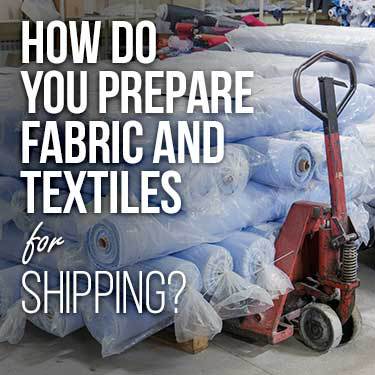
No matter when kind of textile you’re shipping, preparation is similar. Yarn, thread, fabric, towels, bedding, and other textile goods should be prepared for shipping by being palletized. Uniform pallets will make the storage and transport of your textiles easy.
When shipping fabric or cloth, rolls or bolts of material are placed on a pallet. They might be stacked and then covered in plastic wrap for shipment. A roll might hold 50 yards of fabric; a bolt might hold 15 yards of fabric. Finished textile products, like towels or sheets, might be placed in boxes or crates before they are palletized. Cloth, fabric, and textiles should be clean and dry before palletized.
According to information from the Federal Trade Commission, textiles and textile products should be carefully labeled. The country of origin and fiber content should be indicated for each item. This information can come in handy when shipping textiles, as your carrier might require this data to be included in the Bill of Lading.
If you are shipping textiles or fabrics via LTL freight, you’ll need to know the product’s freight class before shipping. Freight class is based on density. Cotton or synthetic cloth on rolls or bales is typically freight class 85. Finished textile goods, like clothing garments, might be freight class 175.
Freight class is a factor in determining the cost of your LTL shipment. Other factors in determining freight shipping cost, regardless of whether you are shipping LTL or FTL, include:

Overcoming the challenges associated with shipping for the textile industry can help you keep your supply chain strong.
Challenges associated with shipping for the textile industry might include finding competitive rates, finding the best carriers, ensuring on-time delivery, and proper documentation and preparation.
The solution to overcoming these challenges is simple: choose a strong freight partner. In fact, you’ll likely find that the right freight partner can help you keep costs down and keep profits up. Dependable delivery will keep your supply chain moving. Choosing a strong logistics partner will also help your inventory pipeline and will allow you to better serve your customers.
Want to learn more about shipping wool? Check out our article How to Ship Wool.
Finding the right freight solution is easy with R+L Global Logistics on your side. We are well versed in shipping for the textile industry and can help your business excel with our array of 3PL services. From full truckload shipping to warehousing to fulfillment and distribution, R+L Global Logistics is ready to be your strategic ally.
Supply chain management in the textile industry requires careful planning. No matter whether you’re moving raw materials to the plant or a finished product to a retailer, leave the legwork to R+L Global Logistics.
You’ll find many logistics companies in the marketplace today, but few are as ready as we are to go to work for you. R+L Global Logistics comes with a proven record of 99.5% on-time delivery, with transparent tracking to keep you informed each mile of the journey.
Additionally, R+L Global Logistics offers the shipping solutions your business needs. Our services are diverse. Count on us when you need:
R+L Global Logistics has friendly freight agents standing by to get a truckload freight quote ready for your business. Let us be your strategic partner when you need freight shipping for the textile industry.
If you have bulk liquid to ship across the country, you might be feeling nervous about the prospect. There’s a lot of trust involved with bulk liquid transport, after all; you have to trust that your carrier has sanitized their tank to prevent contamination, has checked their entire rig for leaks, and can deliver your product on-time and in good condition. This makes it imperative that you work with a trusted, reliable shipping partner from the beginning. Transporting liquid in bulk can seem like a daunting task if you’ve never done it before, but with the right information and a good shipping partner at your side, it doesn’t have to be difficult.
Bulk liquid transport involves transporting the bulk liquid shipment in a tanker truck, instead of in drums or tanks. That tank can then be shipped like any other kind of truckload freight.
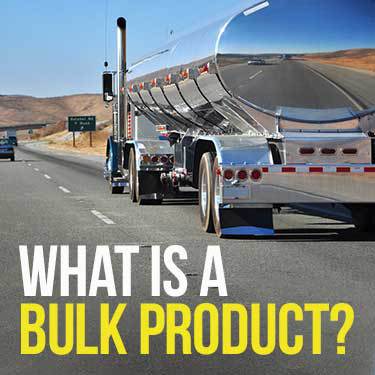
The term “bulk” is used to describe non-containerized, loose goods that are moved in mass quantities or volumes.
Products shipped as bulk loads are packed into one large container to be moved, such as a tank or a shipping container, so it is much more straightforward than packaging goods in smaller containers before shipping. This is useful for moving goods that aren’t intended for general consumers, such as raw materials, ingredients for food manufacturing, and materials for landscaping. Some examples of goods that are commonly shipped in bulk loads are gravel, dried beans, oil, and grains.
Goods that are packaged in “bulk containers,” such as bulk bags, bins, or barrels, are no longer considered “bulk” goods. Once a bulk shipment is broken down into smaller containers, even if those containers are 55-gallon drums or 250-gallon tanks, it is then referred to as a “break bulk” shipment. The distinction is an important one to know because bulk shipments are handled as loose goods, whereas break bulk shipments are loaded individually in containers.
When you have a product to ship, you need to be able to communicate with your shipping partners about what kind of service you need: bulk or break bulk. A miscommunication can end up costing you quite a bit of time and money, after all.
It’s important to keep in mind that, when talking about ocean cargo, “break bulk” shipping can also refer to products that are too large to fit inside a standard shipping container. That can include construction equipment, turbine parts, and large machinery. Don’t let the two meanings for the term confuse you!
Want to know more about the future of bulk transportation and freight shipping? Learn more about green logistics.
Bulk transportation trucking refers to the act of moving bulk quantities of goods by road, with the use of a freight truck.
When bulk goods must be transported across land, freight trucks are the easiest solution. There are many different kinds of specialized truck trailers to transport bulk goods, but all of them are designed to contain and protect the product being shipped.
Whether the product is being moved in a large tank, or a hydraulic dump trailer, the main goal is always to prevent loss of goods. If any amount of the load spilled out of the trailer, that could mean huge losses in revenue. Not only that, but if something like a piece of gravel or a large tree nut flew out of the back of the trailer, it could become a dangerous projectile.
Is your business new to shipping freight? Learn more with our guide to freight shipping.
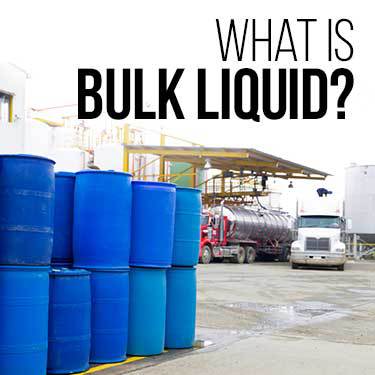
A “bulk liquid” is a large volume of liquid that is transported without being packaged into individual containers.
Like with dry bulk goods, bulk liquids are pumped directly into the back of a specialized freight truck. These types of liquids are often used in manufacturing, food processing, agriculture, and much more! Here are some examples of the types of liquids that are commonly shipped as bulk liquid shipments:
Need help shipping soda in bulk? Check out our article on Shipping Soda by the Truckload.
Bulk liquid transportation, to put it simply, describes the process of moving bulk liquids over long distances.
Since the bulk liquid isn’t packed into any other container before going into the back of a truck, it is extremely important to ensure that the trailer has no leaks—before putting the liquid inside. Even a tiny leak could result in a significant loss of fluid over time. By the time the truck gets to its destination, it could have lost most of the shipment!
Before the actual product is pumped into the back of a freight truck, the trailer is thoroughly examined for any dents, cracks, or other damages that could result in leaks. If there is an area of concern, the entire tank can be filled with water to test for leaks. Not only is a leaky tank inconvenient and expensive, but it is also illegal. Depending on what is being hauled, a spill could result in environmental or structural damage. Therefore, if you’re shipping something, it’s important for you to make sure your carrier has performed a tank inspection recently.
There are many different trailers that shippers can utilize to ship bulk liquids, ranging from standard ISO containers to plastic flexicontainers. However, the most widely used container for shipping both edible and inedible liquids is by far the bulk tanker.
Learn more about freight shipping in USA.
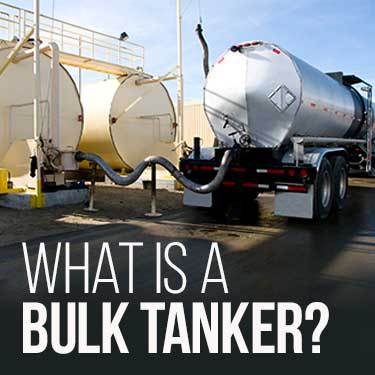
A bulk tanker is a large, cylindrical metal tank that is pulled behind a standard freight truck, like any other type of trailer.
There are several different kinds of tankers that can be used to transport bulk liquids. Some tankers are designed to keep the contents above a certain temperature, like with standard heated trucking. Others are designed to insulate the liquid or keep it cold, as a form of refrigerated shipping. Some tankers are purely cylindrical, for liquids to be pumped in and out using tubes, while others have hoppers on the bottom with valves, to make unloading easier. If a tanker has hoppers on the bottom, then it can be used to transport dry bulk goods as well, such as grains and dry beans. Other tank types include pressurized tanks and acid-resistant tanks.
Most bulk tankers have baffles on the inside to minimize the movement of the liquid inside the tank while the truck is on the road. These baffles act like different chambers, dividing up the liquid into smaller compartments. The reason this is helpful is that it prevents the entire weight of the liquid from surging up against the sides of the tank, which could result in instability and tipping.
A major difference between a bulk tanker and a standard dry van trailer is that tankers need to be cleaned much more often, and much more thoroughly. A tanker needs to be cleaned and sanitized after each load to ensure that the next load it carries isn’t contaminated by any residue left over from the previous shipment. This adds a lot of extra time and cost for the carrier, so shippers can expect bulk liquid transportation to be more expensive than dry bulk shipping.
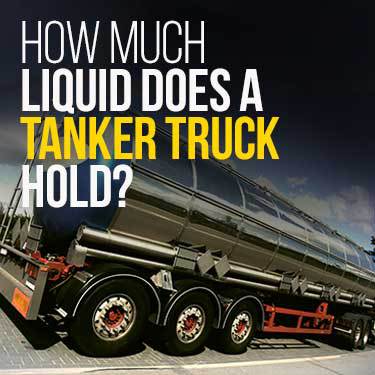
Bulk tankers can be quite large. The average tanker truck can hold between 6,000 and 7,000 gallons of liquid, but there are varieties that hold as little as 5,000 or as much as 11,600 gallons.
With that said, tanker trucks are not limited by the amount of liquid they could potentially contain. The U.S. Department of Transportation’s (DOT) Federal Highway Administration (FHA) mandates that the maximum weight limit for trucks on public roads cannot exceed 80,000 pounds. However, that depends on the number and kind of axles on the truck. A truck can sustain 20,000 pounds for each single axle it has, and 34,000 pounds for each tandem axle group.
This means that if the liquid you are trying to ship is particularly dense, like syrup or paint, then you might not be able to fill an entire large tanker truck. 11,600 gallons of syrup would weigh roughly 130,000 pounds, which far exceeds the weight limit for freight trucks. And that doesn’t even account for the weight of the truck itself! In order to ship such a dense liquid, you would need to utilize smaller tank trucks, or not fill the tank all the way to the top, in order to keep the truck under the maximum legal weight limit.
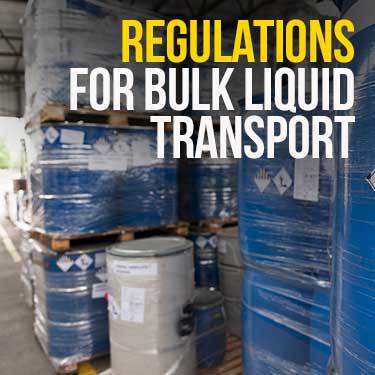
Bulk liquids can be heavily regulated depending on what they are. If you are transporting liquid intended for human consumption, such as juice, vegetable oil, or milk, then you will need to abide by the regulations established by the U.S. Food and Drug Administration (FDA). These regulations include sanitary handling of the food, proper worker hygiene, pest control, and employee training.
Say, for example, you are moving a shipment of milk. You would need to make sure that the milk isn’t exposed to the open air, especially outside. That means that the milk should be moved around and loaded into the trailer with the use of enclosed pipes or tubes. This prevents bugs and other debris from getting into the milk, while also avoiding potential contamination from workers. All holding containers, tubes, and tankers must be sterilized before the milk is allowed to come into contact with it. Otherwise, the FDA may deem the shipment unsafe for human consumption.
In addition to cleanliness requirements, you may be required to provide documentation of training, provide prior notice, and create a Hazard Analysis and Critical Control Point (HACCP) system.
However, foods aren’t the only bulk liquid products that are heavily regulated. Some liquids that are commonly shipped on a bulk tanker are classified as “Hazardous Materials,” such as pesticides, paint, and compressed gas. When you’re shipping HazMat freight of any kind, there are tons of regulations in place to protect you, your workers, the general public, infrastructure, and the environment.
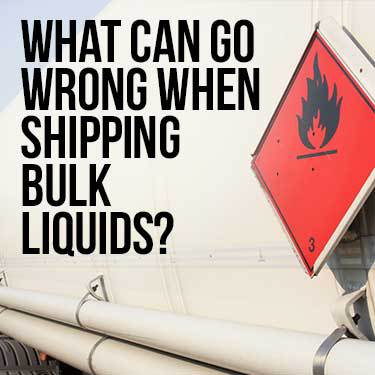
A lot can go wrong when shipping bulk liquids if the driver doesn’t know what they are doing.
Drivers must be extra careful when pulling a bulk tanker, especially if it isn’t completely full. The liquid inside the tanker sloshes around with the movement of the trailer, so if the driver brakes too hard or turns too fast, the weight of thousands of gallons of liquid could surge to one side and topple the trailer. This is why the use of baffles is so important. Not only does a toppled truck waste thousands of gallons of the shipper’s product, but it also poses a huge safety risk to other drivers on the road. If the shipment contained chemicals, then massive environmental damage could be sustained as well.
Even if the trailer stays upright, careless driving could result in the liquid getting agitated, creating foam. At best, foam can be annoying to deal with when unloading the trailer, but at worst, too much aeration could ruin the shipment.
Another thing that can go wrong with a bulk liquid shipment is contamination. Contamination can be a nightmare for shippers moving edible products like milk or syrup. If the tank isn’t properly cleaned before the next shipment is loaded into it, then residue from the previous shipment will contaminate it—even if the two loads were the same product. Imagine how terrible it would be to load fresh milk into a trailer that still has residue from the previous milk shipment inside it!
Finally, as discussed above, leaky tanks can pose a serious issue to bulk liquid shipments. If a leak goes unnoticed, then a significant amount of the product could be lost along the way.
All of this is to say that you should never cut corners when it comes to shipping bulk liquids. Don’t just go with the carrier that offers you the best price. You need to make sure that the carrier you are working with is qualified and experienced with shipping bulk liquids. The last thing you want is to lose thousands of gallons of your product just because you wanted to save a few bucks on shipping.
Ready for the good news?
Transporting bulk liquids doesn’t have to break the bank. You can save a great deal of money—without compromising on quality—by working with a Third-Party Logistics Company (3PL).
A 3PL is a company that works as a middleman in the logistics industry. They find the most reliable carriers on the road and create a huge network of experienced, thoroughly vetted drivers. When you work with a 3PL to move their shipment, those drivers bet on who gets to move your shipment. The carrier willing to charge the lowest rate is the one that ends up moving your goods, which gets you the best deal possible.
One of the major benefits of working with a 3PL, however, is the reliability. You don’t have to look for a carrier yourself, or try to gauge their trustworthiness and experience. When you work with a 3PL, all the responsibility of finding a good carrier is in their capable hands.
In addition to that, if you’re shipping regulated commodities, like food products or HazMat freight, then a 3PL can help you navigate the process with ease. The paperwork involved with shipping certain commodities can be overwhelming, and having someone available to help you through the process can save you time and needless stress.
Finally, many 3PLs offer in-house insurance, or discounts with partner insurance agencies. If your shipment is particularly valuable, as is the case with wine, maple syrup, and essential oils, then you shouldn’t even consider shipping them without getting some form of coverage to protect your investment.
Bulk liquid transport is simple when you work with a trustworthy 3PL like R+L Global Logistics! We’re the best in the industry in customer service, and our commitment to quality means your shipment will be in good hands with us! Our drivers have all passed rigorous inspections and are some of the most qualified carriers in the business.
We offer state-of-the-art shipping solutions for any kind of freight, including bulk liquids and hazardous materials. In addition to that, we can also boast advantages such as:
Plus, with our regular check-ins and complete transparency, you’ll never have to wonder where your bulk liquid shipment is! With R+L Global Logistics, you get more than just quality shipping solutions and friendly customer service. You get the peace of mind associated with knowing your shipment is being handled by the most reliable experts on the market.If you’re ready to get your shipment on the road, reach out to us today to get a free freight quote. You can fill out our online quote form, or give us a call at (866) 353-7178!
On the surface, it doesn’t look like there’s much of a difference between moving vs freight shipping. You’re trying to move a lot of stuff, really far and you want it done all in one day. Well, moving house is a big task, but it's nothing like freight shipping. For one thing, your household items and near and dear things are not products to be sold at a later date. Your possessions are not necessarily being shipped to a warehouse or store, are they?
However, moving house is such a complex task, and often involves similar paperwork when it comes to regulations and moving across borders, that it can be confusing as to why it's not treated the same as freight shipping. You’re probably thinking, moving vs freight shipping, which one is better for you?
Freight shipping is distinct from moving services because of the following things
What is liftgate delivery? This is an additional service offered by many freight shippers that makes loading and unloading freight easy.

Moving services are going to focus on private customers, such as individuals and families.
Wondering about the difference between freight and package shipping? Check out our article Freight vs Package Shipping: What's the Difference? to find out.

No, it's not recommended that you use a freight company to move a household. However, most freight companies won’t even entertain the idea. For one, their trucks are different and not designed for household appliances and furniture. They maybe cannot secure those items down the same way as their normal freight loads would be secured.
Carrier liability and cargo insurance also prevents many freight companies from handling personal moves.
You can however use a freight company for white glove shipping needs. This can for things such as palletized appliances. It needs to be secured and not at risk of being bumped by anything.
Are you shipping furniture from the manufacturer or warehouse to a retailer? Learn more about shipping furniture by truckload.
Moving services will handle normal everyday household items. A freight service will handle anything from car batteries, crude oil barrels, food, berverge, clothes, meat, wheat, vegetables and technology such as smartphones, to name but a few things.
A moving service will usually have a smaller area in which they can deliver your items. So if you live hundreds of miles away from your previous home, you may need to hire a special cross-border or cross-state company. A freight shipping service will usually be able to cross into different jurisdictions as their company is registered to do so with the regulatory transport bodies.
Speaking of which, a moving service won’t normally need paperwork in order to cross over borders, whether state or national. However, freight companies are delivering commodities and or goods, therefore they will affect the local and or regional economy once entered, so they need a different kind of paperwork.
A moving company will interact with a customer directly. They will load your things, shake hands and get to know you. A freight shipping service is completely professional but without the direct physical contact (most of the time) and it will simply arrive, attach your load, and get moving towards the destination.
Do you need white glove appliance delivery for your business? See how a strategic freight partner can help.
Do you need help moving personal items? Even though USA Truckload Shipping, powered by R+L Global Logistics can’t always move your personal goods, we can help get you the information you need.
Our freight experts have put together the guide you need to plan your next move, regardless of whether you’re moving a household or just shipping a few personal items. You can easily download this handy guide and get the information needed to move personal items. We can handle cross-county shipments when you need freight shipping from Vermont to California or take your goods down the East Coast with freight shipping from Connecticut to South Carolina.
We have a reputation that can be called upon as our customers have acclaimed our on-time delivery percentage rate of 99.5%. When you need freight services, let us be your expert.
Freight shipping is an essential part moving products for most Ecommerce businesses. It’s the process of getting the goods out to the customer. When it comes to freight shipping for Ecommerce, there are many benefits of using full truckload and LTL services. You might find that freight shipping is a cost-effective and efficient way to transport goods. It depends on the size of the load whether your business needs to use full truckload or less than truckload (LTL).
Freight shipping for Ecommerce is normally taken care of by a third party, like a 3PL company. These freight experts can serve as a strategic partner and more. They can also advise you on the best method of freight shipping for your Ecommerce needs.
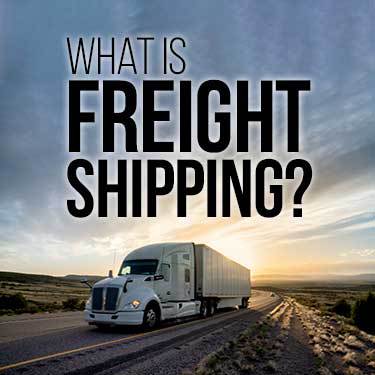
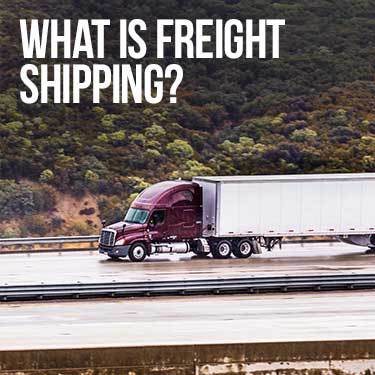
Freight shipping is essentially the transportation of goods by road, rail, ship, or air. It can also involve international shipping. For most Ecommerce businesses, the transportation of large shipments is often taken care of by a third party, like a 3PL company. The goods are traditionally loaded onto pallets or otherwise into large sturdy containers. The mode of transport used often depends on the destination. Freight shipping for Ecommerce can occur domestically or internationally.
In order to classify as a freight shipment, the package needs to either weigh over 150 pounds. Freight also typically measures at least 30 x 30 x 30. Anything smaller could be cheaper to send as a parcel, rather than shipped. Freight is loaded onto pallets and a standard truck can hold up to 26 pallets. The dimensions of the pallets are normally 40 inches by 48 inches and with a maximum height of 80 inches.
Typically, goods are loaded to be shipped from a warehouse. This is often done using a forklift, elevated dock, or other loading equipment. Freight shipping for Ecommerce is usually undertaken as part of a fulfillment service provided by a third party. It’s usual for Ecommerce businesses to outsource their storage, shipping, and delivery. This makes it a lot easier and cheaper for them. There are also many different types of freight shipping, and the appropriate one for your business depends on the goods you need to transport.
Is your business shipping freight from Idaho to Nevada? See how the right freight partner can help goods move on this busy route.
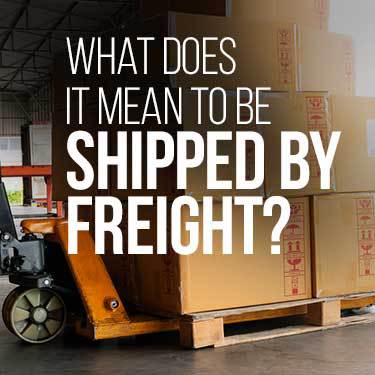
The definition of freight shipping is the process of transporting commodities. The main types of freight shipping for Ecommerce are truckload, less than truckload (LTL), and intermodal. These are all via road. Freight can also be shipped train, ship, or plane. The main types of transport that carry freight are trucks, railroad cars, and large shipping containers.
There are many benefits to shipping by freight. One of the main advantages is that it’s often the best method for delivering goods to their destination on time and safely. It’s also fairly cost-effective and you can save even more money by working with a shipping company. Often business owners don’t have the time or the experience to research carriers and get quotes in order to find the best rates. A shipping company can arrange the best solution for you.
Online freight service providers will work with the best contract carriers, meaning your goods will arrive safe and sound, and more importantly in a timely manner. If you need to get your goods out quickly, you can choose a timeframe to suit your needs. There are a variety of freight services available. Here is an overview of the standard freight shipping modes for Ecommerce.
As the name suggests, less than truckload (LTL) is designed for shipments that won’t require all the space of a full truckload. These are typically packages that are too big to be shipped as parcels that weigh something in between 150 and 15,000 pounds. This is a good solution for an Ecommerce with smaller packages to transport, for example.
If you want to share the truck with another shipper, you can opt for partial truckload. This is a cost-effective option. It’s ideal especially if your goods weigh over 5,000 pounds or take up more than 6 pallets. By sharing the truck space with other shippers, you can make considerable savings.
Full truckload is for larger shipments typically of at least 15,000 pounds. It involves the use of an entire semi-trailer. It’s also a very cost-effective solution. It’s also safer and lowers the risk of any damage being caused to your packages. Depending on the size of your business, full truckload freight shipping for Ecommerce could be ideal.
When goods need to be delivered quickly, it’s known as expedited shipping. This is usually done by truck or air. It’s for deliveries that need to be made in a short time frame.
USA Truckload Shipping, powered by R+L Global Logistics, is ready to be your freight partner. No matter whether you need freight shipping from Idaho to Utah to get goods across state lines or freight shipping from Alaska to Washington down the West Coast, we're here to help.
The main difference between less than truckload (LTL) and truckload shipping is the size of the load. LTL is the preferred method of freight shipping for Ecommerce when the goods only take up a portion of a trailer. Full truckload, on the other hand, is when an entire trailer is needed. Both are cost-effective solutions, depending on how much you need to transport.
If you have fewer or lighter goods to transport, you could opt for LTL. This is a cheaper solution because you can share the cost of the truckload with other shippers. This is often an option for small and medium-sized businesses. If you require more space, you could go for a full truckload shipment instead.
If you have a large shipment, it might be worthwhile opting for a full truckload, especially for long-haul journeys. This also often means that the goods will stay on the same truck and won’t need to be transferred between trucks. Otherwise, you can opt to share a truckload which is often better for smaller loads and shorter journeys.
You can save money by shipping a smaller freight by LTL. It depends whether you have a shipment big enough to fill an entire trailer or not. If you have a full load it could cost you less overall, but if you have a smaller shipment you can share a trailer with other shippers.
Another difference is that often the price of full truckload is worked out by mile, whereas LTL is worked out by weight. This is because if you’re hiring a full truckload the weight isn’t important as long as it’s within the capacity of the truck. With LTL, you pay for the portion of the truck you share in order to transport your goods.
Regarding the time frame, full truckload can be faster because the goods aren’t usually transferred between trucks. You will be given an estimated timeline by your freight shipping services in either case. Both full truckload and LTL are very safe ways to transport your goods. In order to reduce the risk of any damage, however, you could try to package all your goods together and have the minimum number of parcels.
No matter whether you need paint, office supplies, or rubber shipped, we've got you covered. Check out our articles to learn more about how we can help your eCommerce business thrive.
Freight carriers typically all offer residential shipping. Often an additional fee is added if any shipments are being picked up or delivered to a residence. It also can depend on the type of vehicle used. With LTL, sometimes larger vehicles are used such as dry vans and trucks, making it more difficult to enter narrow residential streets.
Pick up and delivery fees are usually charged separately with freight shipping for Ecommerce. The charge depends on the type of shipment, but all carriers should offer this option. It depends on the size of the delivery and the vehicle used. Online freight shipping services will be able to give you a breakdown of the different residential options they offer.
Even LTL packages delivered to a residence will be at least 100 pounds in weight. Anything smaller will be sent by parcel service, whether it’s sent to a residential address or business. If anything is delivered to a residence it’s normally done by appointment and it’s important to inform the carrier first. The truck will also need a liftgate, for example, so it’s vital to let your freight carrier know any necessary information.
New to freight shipping? Learn the lingo with our guide to freight and logistics terms.
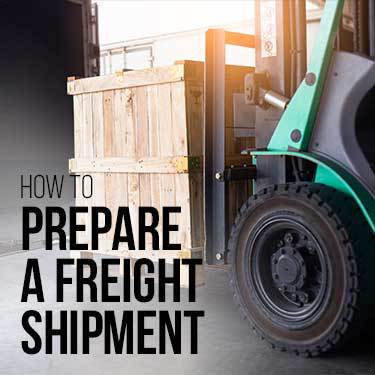
The most common way to pack freight is by using pallets. This helps put together multi-piece shipments to increase protection and reduce the risk of damage. Each pallet is then considered as one piece. Normally pallets are made from wood or plastic and they can weigh up to 70pounds. In general, they are a very secure way to package your freight.
It’s important to select pallets that are large enough for your load, and don’t exceed the capacity. You can then stack the pallets as long as they are sealed. Try not to leave gaps between the goods in the pallets so that they don’t move around during the journey. This will help reduce the risk of damage.
Keep the pallets aligned and don’t stack them into a pyramid, ensure the top layer is a flat surface. Use a slip sheet between each third layer to protect the items and help distribute the weight. Secure the pallets with a strap or banding. If you use stretch wrap, use a minimum of 60 gauge. This will prevent any pieces from getting lost or separated.
Ensure each piece is labeled with the address information of the shipper and the consignee. It’s a good idea to also include the telephone number of both. Depending on the carrier, you might be required to label each pallet twice, with a label on the side and one on the top. Find out which is the correct way to label your pallets from your carrier.
You can get a free freight quote quickly and easily online. Whether you’re shipping something a short distance or in it for the long-haul, a friendly shipping expert will help you streamline the booking process. Your time is valuable and getting a freight quote should be quick and simple.
All you need to do is complete a short freight quote form and a transportation and logistics specialist will get in touch with your free shipping quote. They will be able to understand any other questions you may have about the freight shipping process or freight shipping for Ecommerce.
The rate for your freight cost will be calculated based on a number of factors. This will determine the cost of your shipment overall. Some of the factors include:
It’s recommendable to give your freight carrier as much information as possible about your shipment, so they can work out a realistic quote for you. This can include the origin and delivery zip code, the dimensions and weight of your shipment, the replacement value of your shipment, and any additional hauling needs.
The commodity you're shipping can also influence cost. Hazardous materials can be more expensive as permits and precautions are required. Learn more about DOT hazmat classes.
Freight shipping for Ecommerce is an integral part of the business. If you’re looking for help with your shipping, here a few tips for freight shipping for Ecommerce.
1. Define your shipping goals. These might include to increase conversions, increase average order value, expand your market, decrease costs, or to improve operational efficiency.
2. Choose the right shipping solution for you. This may be between full truckload and LTL for example. Speak to an advisor from online shipping services about your shipment and which shipping solution is the most appropriate.
3. Take into consideration any factors that affect cost. As mentioned before, these mostly include product size and weight, shipping destinations, and shipping options.
4. Consider all the shipping options. Some cost-cutting solutions can include free in-store pick up, LTL freight carriers, and free shipping.
5. Consider all the delivery options. If you run an Ecommerce you might want to offer the option for same-day delivery, for example. You could also offer different delivery options and charge accordingly for each.
6. Consider offering free shipping to your customers. This is very appealing to customers and many will often choose a company that they don’t have to pay for shipping. Remember you’ll need to cover the cost in your profits, however, as shipping won’t be free for you.
7. Display shipping promotions on your website. You should include a banner or call-to-action on your website that advertises your shipping offers, particularly if you’re offering free shipping. You could set a time limit for a shipping promotion, such as “free shipping until the 31st” in order to draw more business in.
8. Always inform your customers of the delivery time. Customers can get quite impatient and being informed of the delivery date can help to pacify them a bit. It’s also a good idea to give an indication of the delivery time, particularly if you’re delivering to a residence. Ideally, you want the recipient to know when to expect their goods.
If you’re looking to book your freight shipping for your Ecommerce or other business, reach out to USA Truckload Shipping, powered by R+L Global Logistics. Our friendly experts understand freight shipping for Ecommerce and are prepared to help you move products efficiently and effectively.
You’ll find USA Truckload Shipping, powered by R+L Global Logistics, offers services including:
Booking your freight shipping couldn’t be easier. Speak to one of our experts and find the perfect shipping solution for your Ecommerce. Our friendly team is always happy to help. We have expertise in a wide range of fields and have dealt with a number of different businesses. If you would like to know more about freight shipping for Ecommerce, get a free truckload freight quote today.
There are many reasons why you might need freight shipping for fine art. Maybe you need to ship a single, oversize sculpture. Maybe you’re moving a whole gallery of goods by the truckload from New York to Los Angeles. Regardless of the reasoning, the right freight partner can help you get your art from Point A to Point B.
Freight shipping for fine art involves careful coordination. Art must be carefully crated and palletized. Insurance needs to be arranged, especially for one-of-a-kind works. Services need to be scalable to service both individual collectors and large museums and galleries. Other factors might come into play as well, so it is important to work with a well-versed and experienced freight partner.

Shopping for art shipping services can be overwhelming. If you’re new to the industry or need one-off shipping services for a piece of artwork, it can be difficult to find the right freight partner. Thankfully, the experts at USA Truckload Shipping, powered by R+L Global Logistics, are prepared to walk you through the process of freight shipping fine art.
Shipping fine art requires proper packaging and handling to ensure safe transport and delivery. In most cases, fine art should be crated and palletized prior to shipping. Effective packing and crating is a must, as this is what protects the art as it makes its journey. If the artwork you are shipping is an irregular size, you might opt to take advantage of a custom crating service before shipping.
Palletizing your artwork -- no matter whether the art is a painting, sculpture, or other work -- will help lower shipping costs and can help reduce damage, too. Pallets come in many sizes and shapes. However, the most common size for freight shipping pallets is 48 inches by 40 inches. Using standard size materials, like these pallets, can help ensure you get a competitive freight shipping quote for your fine art.
Freight shipping fine art involves more than pallets and crates. You’ll want to take advantage of other packing materials to protect your work while in transit. Artwork can require product-specific packaging material for safe handling.
Product-specific packaging for fine art might include:
The kind of packing material you choose depends on the kind of art you are shipping. Paintings might be wrapped in an anti-static or specialized cushion, placed in a corrugated container, and then ultimately placed in a wooden shipping crate for transport and storage. Large sculptures might be shipped in a wooden crate with special filler in empty spaces.
Are you freight shipping books or printed material? See how a strategic partner can help get these goods on the move.
Freight shipping for fine art involves working with the right carrier who offers the right services. USA Truckload Shipping, powered by R+L Global Logistics, is able to offer white glove delivery service via some of the top carriers on the road today.
When you opt for white glove delivery service, you’re getting freight handling with a special touch. Freight can be delivered inside to your room of choice or right into your gallery. Debris and packing material will be removed by the friendly carrier. Your artwork will be ready to hang or place right after delivery.
You’ll also find that USA Truckload Shipping, powered by R+L Global Logistics, also offers other services that might come in handy when freight shipping fine art. Services including climate-controlled shipping and truckload dry van shipping are available to help ensure your art is handled properly.

Freight shipping for fine art comes with a variable price tag. Many factors can influence the cost of freight shipping your art. These factors might include everything from how the art is palletized to available truckload capacity at the time.
You can get the best freight quote for your fine art by being prepared with some information. If you have the right information ready, a friendly freight expert will be prepared to give you a quote in just a few moments. The information you’ll need to determine the cost of shipping cart includes:
When you have this information ready, you can reach out to a freight expert at USA Truckload Shipping, powered by R+L Global Logistics, to get an accurate freight quote and start planning your shipment.
One of the things that makes art valuable is that it is often unique and one-of-a-kind. While this rarity is what makes the art desirable to collectors and museums, it can also make art difficult to insure.
You might find that working with a freight expert like USA Truckload Shipping, powered by R+L Global Logistics, can make insuring your artwork easy. Typical freight insurance will cover your shipment in case of total loss or damage, but in the case of extremely valuable, art you’ll likely want your own private insurance. An experienced freight expert can walk you through the process of obtaining the right insurance to make sure your art is protected as it travels.
There’s much more than goes into freight shipping fine art than just finding a partner to pack and ship. You’ll need a full-service, strategic partner to ensure your art is handled properly every mile of the journey. From pickup to delivery, USA Truckload Shipping powered by R+L Global Logistics, can ensure your art is treated with kid gloves and care. We can assist with freight shipping from Michigan to California, city-to-city freight shipping from Washington D.C. to Philadelphia, or along any other busy route.
Our diverse service offerings can handle the freight needs of any gallery, art collector, artist, installation project, or other art need. From climate-controlled shipping to white glove delivery service, let us show you what sets our services apart from the rest.
When you’re ready to start freight shipping fine art, reach out to USA Truckload Shipping and R+L Global Logistics at (866) 353-7178.
How are sunflower seeds transported? Well, you’re not alone if you’re asking yourself that question. The process of shipping sunflower seeds around the U.S. is not as simple as you might imagine, and depending on how it’s done, there are different challenges that you could encounter. If you want to turn this difficult process into a stress-free experience, then R+L Global Logistics is on hand to help! You won’t have to worry about a thing, knowing your shipment would be in good hands.
How are sunflower seeds transported? Packaging is the most important thing to consider if you want your sunflower seeds to make it to their destination intact. In addition to that, you will also need to ensure your shipment is protected from moisture, or else it could spoil—or ignite—before it arrives.
The common sunflower (Helianthus annuus) is a versatile plant that can grow in any temperate climate, but the vast majority of domestically grown sunflower seeds come from only three states. 75% of U.S. sunflower seeds are grown in North Dakota, South Dakota, and Minnesota, and then transported around to other states.
Need help moving sunflower seeds south? Learn more about freight shipping from North Dakota to Florida.
The reason those northern states top the sunflower seed production charts is because of their particular climate. Sunflowers are a short-season crop, which means that although they need a lot of sun, they mature completely in only 3 or 4 months in the summertime. The particularly harsh, cold winters of those northern states helps to keep bugs and other pests away from the sunflowers as well, allowing them to thrive once the cold snow melts away.
A single sunflower has the potential to produce up to 1,400 seeds at one time, and those seeds are being applied in a multitude of different ways. It’s no surprise that sunflowers are becoming a more popular crop as time goes on!

There are two different types of sunflowers that are grown as a crop: the oilseed variety, which is used to press into cooking oil, and the non-oil or confectionary variety, which is often sold as a snack, ingredient, or garnish. Seeds used for oil are small and completely black, which is why those sunflowers are sometimes called “black oil sunflowers.” The confectionary sunflower seeds are larger, about an inch long, and have white stripes going down the length of the husk.
The U.S. sunflower seed industry is consistently valued above $450 million per year, with the vast majority of that profit coming from sunflower oil. Of the seeds grown in the United States, only 10% are the confectionary variety, while the other 90% is the oilseed variety.
Both types of sunflower seeds have a multitude of different uses.
Although black oil sunflower seeds can be used in the same ways as confectionary sunflower seeds, it is coveted for its high oil content. These seeds are primarily used to make oil, and the meal that is left over after pressing the oil out is used as a high-protein filler for animal feed.
Confectionary sunflower seeds are used for different things depending on the seeds’ grade. The highest grade seeds are dried and roasted, either in the shell or dehulled, to be eaten as a snack. Seeds that are still food-grade, but lacking in good visual characteristics, are often sold as ingredients. They can also be used to make:
Finally, sunflower seeds that are not deemed to be food-safe are used in birdseed and pet rodent food.
In most cases, the farmers who grow the sunflower seeds do not have the facilities to process them into oil, roast them for consumers, or mix it into birdseed. In order to do that, the sunflower seeds must be shipped to another location.
To prepare sunflower seeds for freight shipping, they must be packaged to make it easier to move them onto and off of the trucks. There are several packaging options that you can choose from, but the most common option is with burlap or woven plastic bags. These bags can then be handled individually, or they can be palletized to move multiple bags at one time.
To palletize bags of sunflower seeds, you should first place down a sheet of plastic or fiberboard down to cover up the gaps in the pallet and provide a smooth, splinter-free surface to stack your bags on. Then, stack the bags horizontally, staggering them over the other’s edges to give the pallet stability. Once you’ve stacked the bags to the desired height (not exceeding 6 feet), wrap the entire thing in several layers of plastic wrap to secure it all together, and firmly attach it to the pallet.
Another option for shipping sunflower seeds is with a collapsible bulk container, which is a large plastic bin with pallet slots already in the bottom, so it can be moved by forklift. These containers can come with or without a cover on top, but you should consider covering your sunflower seeds to ensure you don’t lose any if the trip is a bit bumpy.

If you need to ship a large quantity of sunflower seeds a long distance, then you might want to consider foregoing packaging altogether to ship them as bulk goods. That means the loose sunflower seeds would be dumped into the back of a freight truck that’s open at the top. There are many benefits to shipping sunflower seeds this way, but problems can sometimes arise when shipping dry bulk freight.
One of the biggest benefits of this type of shipping is the efficiency of it. Since there aren’t any pallets, packing materials, or other debris, you can move a lot more sunflower seeds at once this way. Pallets and other materials add weight and take up space, so getting rid of them means you’ll be able to fit more sunflower seeds on the truck.
Shipping in bulk also saves time. Since sorting, bagging, palletizing, plastic wrapping, and loading the seeds takes an incredibly long time, it’s not hard to imagine how much time you could save if you skipped all the steps in the middle and simply dumped the sunflower seeds onto a truck. It also makes it easier to unload once it reaches the processing facility.
If speed is a concern for you, you could also invest a little extra money into getting expedited shipping services for your freight. That means, if you’re working with a 3PL, that your freight would be given priority over other shipments the company is moving, to get it on the road as quickly as possible. It also means that your shipment will be assigned a driver team so that it can go a much farther distance without stopping than ordinary shipments.
However, even though there are several benefits to shipping sunflower seeds as dry bulk goods, that doesn’t mean everything is smooth sailing. Some things can still go horribly wrong if you aren’t careful.
Moisture is one of the biggest problems that you’ll need to be aware of if you choose to ship your sunflower seeds as bulk freight. If even a little bit of water gets into the shipment, it could ruin the whole batch. Excess moisture will cause the seeds to begin to rot, turning them rancid and rendering them inedible. If you want to prevent this, you’ll need to take some steps to control the moisture level of your shipment.
One of the simplest ways you can protect your shipment from moisture is to pay attention to the weather. If you know it’s supposed to rain anywhere along the shipment’s route, then you should hold off shipping immediately if you can. However, if you absolutely cannot wait for clear weather, you do have another option.
The first steps of protecting a shipment against moisture actually happen before the truck is loaded. You will need to make sure that the sunflower seeds you are shipping have had an adequate amount of time to dry, and have a moisture content of less than 9.5% before they are packed.
Next, you will need to have the truck prepared. The inside of the truck should be thoroughly cleaned and dried, and then lined with a plastic liner if necessary. Then, the dried sunflower seeds can be loaded up onto the truck.
Once the truck is loaded all the way, you will need to position a tarp over the top of it to keep out rainwater, snow, and other precipitation. You should consider using a reflective tarp to deflect sunlight as well, since high temperatures can cause condensation to build up on the inside of the container. Then you can be sure that you have given your shipment the best chance of staying dry.

Rot and decay aren’t the only things you’re going to need to worry about if your shipment gets too damp. Too much moisture encourages increased respiration, which causes the fat inside the sunflower seeds to rapidly break down. This process (called hydrolytic/enzymatic fat cleavage) produces intense heat, which further amplifies the process and exponentially speeds it up.
Sunflower seeds must be dried before they are packed for bulk shipment, but if water enters the shipment anyway, that can end up working against you. Even dry sunflower seeds are high in fats and oils, which can be a dangerous combination. The intense heat generated by this process, coupled with the dry shells and high oil content, can cause the shipment to ignite. As you can imagine, fires like this are extremely difficult to get under control, and almost always result in the loss of the shipment, damage to property, and risks for the truck driver.
For most commodities, this process takes some time to become a problem, so it rarely affects short truckload shipments—but that is not the case with sunflower seeds. The particular composition of the seeds means that a devastating reaction can take place in mere hours if even a small amount of water is allowed to enter the truck. Because of this, it is imperative that you take the necessary steps to protect your shipment from moisture.
Once the sunflower seeds arrive at the processing plant, there’s a high likelihood that they will be roasted and dehulled to turn them into a convenient and tasty snack. Once the hulls are removed, however, the seeds are going to have different handling requirements. They are no longer as resistant to damage or contamination, so you need to ensure that they are handled accordingly.
In almost all cases, once the seeds are processed, they will be packaged for consumers and shipped directly to a store. Regardless of whether the seeds are raw or roasted, they are packaged in similar ways. The most common choice for packaging is an airtight plastic bag or resealable pouch. It is absolutely imperative that the container is airtight, since the seeds will go stale if left out for too long.
Since these packages are going straight to stores, you will need to make sure you are compliant with all of the Food and Drug Administration’s (FDA’s) labeling requirements, such as nutrition labeling, organic claims, and net quantity statements. These requirements also require you to include your own contact information and company name on the label as well. You could get in serious legal trouble if the packages are not labeled properly.
Once the seeds are packaged, they should be packed in larger boxes and then palletized for easy loading and unloading. The process of palletizing boxes is similar to palletizing bags, but instead of staggering the layers, you should stack the boxes in columns so their edges line up. This will give the pallet more strength since the sturdiest part of a box is its corners. As with bags, you will still need to wrap the entire pallet with plastic wrap to hold it all together. Unlike with bags, however, it is recommended that you use thick nylon straps to firmly secure the boxes to the pallet.

Sunflower seeds are often sold as part of candies or sweets, and none is more iconic than the brightly colored, candy-coated chocolate sunflower seeds. However, when it comes to shipping this delightful confection, you might run into trouble. Shipping anything made of, or including, chocolate introduces an entirely new set of challenges when compared to shipping regular sunflower seeds. The most important difference between shipping regular sunflower seeds and chocolate-covered seeds is temperature.
As you probably already know, chocolate has a frustratingly low melting point. Chocolate can begin to lose its shape at temperatures as low as 80 degrees Fahrenheit, and the back of a freight truck can get much hotter than that. Thankfully, there’s a simple solution that doesn’t involve expensive packaging or dry ice: refrigerated freight trucks.
Refrigerated shipping is an affordable option for keeping your shipment at a consistent temperature. The temperature can be precisely controlled by the driver, and they get notified any time it fluctuates outside of the acceptable range so that can be corrected. Refrigerated shipping with R+L Global Logistics is quick, easy, and reliable. We uphold high standards for our drivers and their refrigerated technology, so you know you’re getting the best in the industry.
No matter what you have to ship, R+L Global Logistics can be your trusted partner. Not only are we one of the most reliable freight partners out there (with a record of 99.5% of all our shipments being delivered exactly on schedule), we can also boast best-in-class customer service. Our specialists are multilingual, available 24/7, and dedicated to providing customized solutions to all customers. If your shipment has specific needs, we’re flexible, and can provide a tailored solution just for you!
In addition to that, you can rely on our:
We can do anything from freight shipping hazardous materials to transporting a mobile home. We’ve seen it all!
Now that you know how sunflower seeds are transported, why not give us a call to get the process started? Reach out to us at (866) 353-7178, or if you want to save time, request a freight quote by submitting our quote form online.
R+L Global Logistics
315 NE 14th St., Ocala, FL 34470