
Lorem Ipsum... this is the text for the quick answer...
Using a shipping skid vs pallet is a choice that shippers of bulk cargo constantly face. Each platform can impact the success or failure of transport operations. Therefore, shippers will need to know the difference between each of these platforms before they send a load of cargo.
According to the National Wooden Pallet & Container Association, pallets and skids are fundamental to truckload transportation. While both assist in the handling and storage of goods, skids are non-stackable, with a single deck. Pallets have a top and bottom deck that makes them stackable and more versatile when shipping goods.
Businesses must be able to decide between using skids vs pallets for their goods. With the right information, you’ll be able to pick the best option for your needs.
Skids and pallets often go unnoticed in the transportation industry. Yet, these platforms are crucial to the smooth operation of the supply chain. Many shippers don’t know what the difference between a skid and a pallet is other than being different terms. Understanding what these platforms are and how they work is essential.
The skid was the precursor to the pallet. This platform doesn't have a bottom deck, which means it only has a single surface where the goods are loaded. Skids are non-stackable, but they can easily be dragged throughout a warehouse. These platforms also provide a certain level of stability that can be beneficial for specific types of loads.
This includes:
Skids have a lower center of gravity because they’re closer to the ground.1Pallets vs. Skids vs. Crates: What’s the Best Option? https://performance-corp.com/pallets-vs-skids-vs-crates-whats-the-best-option/ This trait provides more stability and reduces the risk of freight loaded on top of it from falling over during shipping or storage. The absence of a bottom deck makes skids a much cheaper alternative to pallets.
That said, the platform cannot be stacked because of this feature. However, skids are useful in scenarios where height restrictions could be a problem. These platforms are slightly shorter, which means taller varieties of cargo can pass height requirements.
The non-stackable nature and low profile of skids make for perfect long-term storage of heavy items. For example, skids are often used to store large machinery parts in a factory.
Pallets have top and bottom decks, which gives them stability. This design feature also makes them harder to drag through a warehouse. However, the top and bottom deck board construction allows pallets to be lifted by a forklift, pallet jack or other compatible devices.
Like skids, these platforms can accommodate a variety of goods for freight shipping.
These include:
Pallets allow shippers to send small items in bulk. Typically, goods are packaged into boxes and stacked in an organized manner on the platform. The boxes are secured using plastic wrapping. Pallets can also come in a variety of different dimensions. This allows shippers to send varying volumes of cargo.
Due to their design and the universal use of forklifts, pallets are easily moved around within a warehouse or factory setting. This makes them suitable for fast-paced environments where goods need to be frequently relocated. Pallets can also be loaded and unloaded from trailers very easily.

Making the decision between using a skid or a pallet for shipping freight can be critical. Different cargo types and logistics circumstances require either one loading platform or the other. Therefore, shippers need to know when it’s better to use pallets vs skids.
Shipping skids are ideal when transporting heavy or bulky items. These platforms are able to withstand significant amounts of weight. This makes them a great foundation for heavy machinery and other cargo as it’s transported throughout the supply chain.
Other instances when it’s good to use a shipping skid include:
Items that are fragile or awkwardly shaped can’t be stacked during transport. In these cases, skids can be a better choice because the platform is designed to sit on the ground and isn’t intended for piling up.
Examples include:
These fragile and high value items benefit from be from being transported on a skid. They’re provided with a stable base, propped up rather than resting on the ground.
For long-term storage of items in a warehouse, especially when they're heavy, skids are the way to go. The single-deck design means they sit lower to the ground, making them a safer choice for storing items like engines or heavy equipment.
Pallets are versatile and regularly the go-to choice for many shipping needs due to the ease of use the platform provides. They're commonly utilized for lighter products or when items need to be moved frequently.
Shippers can also use pallets when:
Pallets can carry a diverse range of products. As long as these items are boxed and secured, numerous types of cargo can be transported on these platforms. Pallets can also be racked easily inside a warehouse. This gives businesses the option to ship and store extremely large amounts of freight.
Another benefit of using pallets is efficiency. Rather than sending numerous packages of non-palletized freight, shippers can stack their boxes onto one platform and send their goods all at once.
This structures also provide a certain level of protection for cargo by lifting it slightly off the ground. Pallets create a buffer between other packages and freight inside a trailer. Therefore, cargo is protected against potential impact from other items.
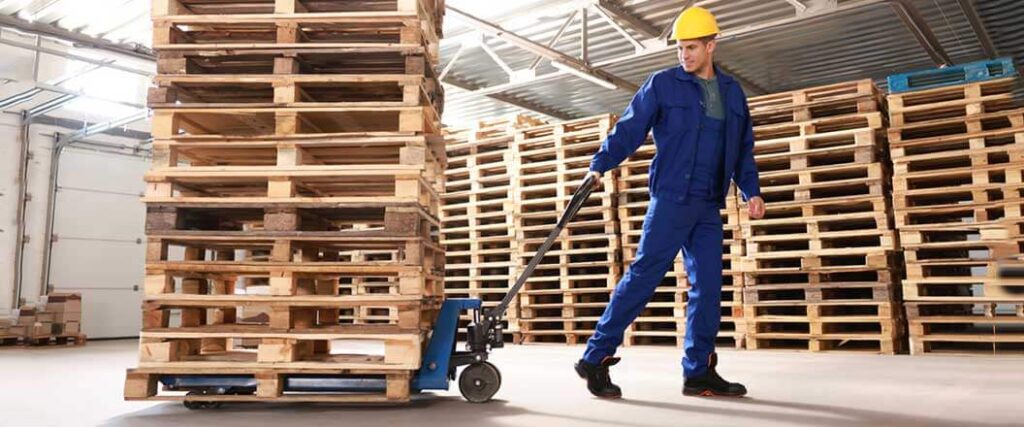
Generally, skids tend to be less expensive than pallets. These platforms have no bottom deck, which reduces the amount of lumber need to build one. As a result, the cost to buy a skid is a bit cheaper than prices for pallets. We’ve provided some data showing the cost comparison between both of these platforms.
| Type of Platform | Cost |
| Pallet | $100-$400 |
| Skid | $30-$60 |
Provided by QMH
While a skid will be cheaper than a pallet, this doesn’t necessarily mean it will be less expensive to ship with one. Businesses must also consider the type of freight their platform of choice will carry.
Skids are meant to hold and store robust types of cargo. Freight of this variety is more expensive to transport due to the excessive dimensions and weight of the items. On the other hand, pallets are used to ship smaller products.
While tinier goods are usually transported on these platforms in bulk, the cost for shipping is likely to be much less than what it would be for larger types of freight.
Pallets and skids are used for slightly different purposes. That said, these platforms can provide numerous benefits to business that need to ship a variety of cargo.
These include:
Each of these platforms are extremely durable. Pallets and skids alike can survive multiple shipments for around three to five years if each are made out of wood. Plastic versions can last even longer, with a lifespan of around 10 years.
That said, pallets are more likely to come in plastic form than skids. Wood is still a good choice, though. For instance, broken wood pieces can be easily fixed. This can save shippers money they would spend on a new pallet or skid.
Another benefit of these platforms is the versatility that shippers will experience. Pallets can be lifted by a variety of other warehouse equipment. This makes it easier to load and unload cargo or move freight around a warehouse.
Skids can be used when transporting large types of cargo. However, the design of these platforms are great for storing freight that’s excessively large and heavy. Finally, both of these improve safety for warehouse workers.
Pallets allow forklifts to pick up and move large quantities of freight as needed. This removes the need for warehouse workers to move the cargo manually. As a result, injuries are reduced.
Skids can help provide a stable base for large types of freight, which prevents cargo from potentially falling on someone.
At USA Truckload, we can accommodate for freight that’s attached to skids and pallets. Our network of experienced carriers have the equipment required to move these different types of platforms on and off their trailers. Therefore, you’ll never have to worry about being denied a shipment because your freight is attached to a pallet or skid when you choose USA Truckload.
Our carriers can also provide the following transportation services.
We guarantee that your freight will be shipped safely and arrive on time, regardless of what service you choose. If you’re ready to transport your cargo with USA Truckload, then fill out your RFP today. You can also call our team at (866) 353-7178 if you have questions or concerns about our services.
Knowing how to negotiate freight rates can help shippers save a lot of money. The cost to send bulk loads of freight can be very high. Fortunately, many carriers are willing to work with their customers and provide them with a cheaper rate.
The American Trucking Associations (ATA) says shippers can learn how to negotiate freight rates by:
This gives shippers leverage when discussing terms with a carrier.
Understanding how to negotiate freight rates can be difficult. We’ll provide the information you’ll need to get the best price from a carrier.
Before a shipper can learn how to negotiate rates with carriers, they should know when to start the process. Senders of freight can discuss lower shipping costs with a transportation provider prior to booking a load. Once a shipment is booked, the price will likely be final, depending on the carrier’s policies.
Freight negotiations can take place:
Shippers frequently reach out to transportation providers for a cheaper shipping rate. To accommodate potential customers, carriers will conduct negotiations using a shipper’s preferred method of communication.
There are various factors in the transportation industry that can cause low and high freight rates.
Some include:
To illustrate how frequently freight rates can change, consider the fluctuations in diesel prices over the past three years.
| Year | Average National Price |
| 2021 | $2.68 |
| 2022 | $3.72 |
| 2023 | $4.58 |
Provided by Statista
During this period, diesel fuel prices have sharply risen. The region where freight is being transported can affect these costs as well. Some regions have slightly lower or higher than average diesel prices.
The type of load and its dimensions will influence freight rates. Heavier commodities, for example, are more expensive to ship. Goods that are heavily regulated or high in value can increase the freight rates a business will have to pay as well.
While shippers can conduct freight negotiations with shipping companies, they shouldn’t expect costs to be reduced drastically. Carriers have to charge prices based on factors impacting their industry.
If transportation companies charge too low, they could hurt their business operations. Shippers should be ready to compromise on a freight rate that’s low enough to meet their budget needs, but still high enough for the carrier to make a profit.
There are many preparations that shippers can take prior to picking a carrier and discussing shipping terms with them. The information they find will help them negotiate the best price for their commodities.
Businesses should identify their operating costs before they start negotiating freight rates. Doing this will help a company determine what they can afford. If pallet shipping prices are too high, a business could end up losing more money than could be gained from a sale.
Therefore, senders of freight should try to find carriers that charge a rate closer to what they can afford. Shippers can negotiate an even lower amount that’s within the budget of their operating costs.
Shippers that educate themselves on the transportation industry will have an easier time negotiating the best freight prices.
Topics to research prior to booking a load include:
The transportation industry is constantly changing. Despite this, shippers can identify market patterns with thorough research. If a carrier offers truckload shipping rates that are higher than the industry data suggests, shippers can use the information they’ve gathered to argue for a cheaper fee.
Preparing a shipment thoroughly will give businesses an edge when they conduct freight rate negotiations with shipping companies. Readying a load means more than packing each commodity into a box and palletizing.
Businesses can prepare a shipment by:
Shippers that provide carriers with detailed information on their shipments will have bargaining power when negotiating freight rates. Businesses that know how much their goods are worth, and the expenses associated with moving them, can determine the best freight rates for their load.
Senders who know the value of their goods can identify if they’re being overcharged for transportation services. Additionally, carriers can provide a more accurate rate when they’re given detailed information about the goods they’ve been hired to move.
Another significant concept to grasp when learning how to negotiate lower freight rates is load-to-truck ratios. This is a measure of the number of shipments that require transportation versus the number of trucks available.
There are two different types of load to truck ratios:
Truck availability is scarce when the ratio is high. Therefore, carriers will charge more when they take on a shipment. This can make negotiating freight rates much more difficult for businesses that need to move goods in bulk.
When the ratio is low, carriers become desperate for customers. They will charge less to attract more loads. Businesses should try negotiating the best freight shipping rates when load-to-truck ratio isn’t high. Carriers will be more likely to accept a lower rate if it means moving their trucks.
This may also be the best time to submit a Request for Proposal (RFP) if you know that you need routine freight services. With an RFP you have the chance to lock in a lower freight rate even when load-to-truck ratios are high.
Knowing about carrier fees is very important when learning how to negotiate truckloads. There are many charges that a carrier might add to a shipment.
Some of these fees include:
Shippers who don’t familiarize themselves with carrier fees will be surprised when their negotiated rate is higher than expected. A sender can ask their transportation provider about applicable charges. Once carrier fees have been determined, businesses can conduct negotiations to lower the amount.
Lastly, shippers should have a thorough understanding of spot rates. This type of charge is the amount a business will have to pay for a one-time shipment.
While it’s best for businesses that send freight frequently to establish a contract with a carrier, there are occasions where sending a one-off load is necessary. That said, shippers need to look at contract rates and spot rates.
If a business finds that spot charges offered by a carrier are more expensive than contract charges, they can use that information to negotiate the best freight quotes.
When learning how to get the best rates, shippers should keep in mind that carriers will charge more when they have to fulfill rigid requirements. Transportation companies have many customers whose freight they need to move.
Asking a carrier to ship commodities within specific deadlines will require more manpower and higher expenses on their end. This results in higher rates for transportation services. Instead, shippers should be as flexible as possible when booking a load.
Shippers can do this by:
Offering longer lead times will give carriers more time to plan a shipment. This gives transportation companies the opportunity to pick the fastest route, thus lowering costs on the sender.
Receiving a shipment at a different final destination can be helpful as well. Some drop off locations are inaccessible for semi trucks. In other instances, a final destination might make transporting other loads difficult. Shippers that agree to have their load delivered to an area that’s convenient for them and their transportation provider will have access to cheaper freight rates.
Senders can receive a more affordable rate by consolidating their load with another shipment traveling to the same or nearby locations. This reduces transport costs because a carrier won’t have to send an entirely different truck to pick up their freight.
Businesses that need to ship in bulk can also get the best freight rates by making their commodities available for pickup during off-peak days. These are days when shipping volumes are lowest, usually Mondays or Fridays.
If a carrier offers an unacceptable rate, businesses can use their flexibility to negotiate a lower amount for their shipment.
Shippers should have the results of their negotiations in writing. Transportation providers provide services to numerous customers. There’s a chance that they could forget what the rate confirmation was for a certain customer.
Shippers should always obtain a signed freight contract after negotiating with a carrier. If a business finds that their transportation provider is overcharging them, they can use their signed document as proof that a lower rate was agreed on by both parties.
There are many responsibilities that shippers will need to take care of when learning how to negotiate freight rates. That said, senders should also avoid certain mistakes that could raise the cost to move their freight.
The first thing a shipper should avoid when negotiating the best freight prices is to judge rates by how many miles freight will travel. There are many factors that can influence the costs associated with sending freight to another destination besides distance.
This is why researching the transportation market and the commodities being sent are so important. Without the right preparations, negotiations could go very poorly for shippers who think their rate should be lowered based only on the distance their load has to travel.
Another common mistake made by businesses when negotiating shipping rates is their failure to ask questions. Most shippers aren’t experts on the logistics industry or the various factors that can cause freight rates to fluctuate.
Therefore, it’s essential to ask carriers questions. While businesses that need to move freight should conduct their research prior to negotiations, there’s always the chance they missed something important or a new concern has come to light.
A good carrier can address any question a potential customer asks. Obtaining as much information as possible can help a shipper negotiating freight rates.
USA Truckload Shipping can move your freight at an affordable price. Our vast carrier network gives us the ability to pair our customers with an arrangement that’s right for them. The companies we work with can provide different transportation services based on a shipper’s needs.
This includes:
We can also offer you consulting services if you have questions regarding your load. You can start using our services by contacting our team at (866) 353-7178 or by filling out one of our quote forms.
Rail drayage is a service that shippers often overlook when transporting goods into and across the U.S.. While port drayage and OTR shipping are more common, shippers are finding that there are benefits to shipping freight by rail and having those goods drayed to their next location.
Rail drayage is a shipping service used to transport goods a short distance from a rail ramp to a nearby warehouse or distribution center. Using a combination of rail and drayage options can help save on shipping costs by only using truck or chassis transport for a small portion of the shipping process.
Rail drayage will be easy for you to use once we’ve explained how this great service works.
Rail drayage is a short haul service that moves freight by truck from a rail yard to a nearby destination. Typically, the nearby destination is a warehouse or distribution center. This service is completed using a few simple steps.
These steps make rail drayage an efficient way to move freight out of a ramp in a short amount of time.
Rail drayage is a type of intermodal shipping, but not all intermodal shipping utilizes rail or drayage services. When freight is shipped intermodally, it means that multiple modes of transportation will be used to deliver the freight to the final destination. Intermodal shipping is a service that’s become extremely popular over the last few years.
| Year | Volume |
| 2018 | 18.2 Million |
| 2019 | 18 Million |
| 2020 | 17.7 Million |
| 2021 | 18.1 Million |
| 2022 | 17.7 Million |
Providing by the Intermodal Association of North America
Because rail drayage utilizes truck transportation to move freight that has come off a rail, it is considered a form of intermodal transportation. While the truck used to take freight from the rail yard might not be dropping it off at the final destination, multiple modes are still being used to move the shipment through the supply chain.
What sets these services apart is the distance they transport freight. Intermodal shipping encompasses the entire journey of a shipment. Rail drayage only takes up a small part of the shipping process since it’s used only to move freight a short distance. Therefore, rail drayage is a service that can be used within intermodal shipping.
Our article on intermodal drayage will give you more information about this type of service.

Having an efficient supply chain is extremely important for shippers. Rail drayage has a few benefits that will give shippers the supply chain they require.
These include:
We’ll explain each of these benefits and how they contribute to a more efficient supply chain.
Trains are much more fuel efficient than trucks. Therefore, the less fuel that’s used, the cheaper costs will be for the shipment. Another reason truck shipping is so expensive is due to the fact that gas prices can fluctuate greatly.
The cost of fuel can also fluctuate depending on factors like:
Fluctuating fuel costs combined with less fuel efficiency makes truck shipping more expensive than rail. With rail drayage, any freight that arrives at the rail yard has already traveled most of the journey to the final destination. A truck will only be transporting freight a short distance, which means fuel costs won’t be high.
Learn more by checking our article on Truck vs Rail shipping.
Shippers of extremely large quantities of freight will find rail drayage especially useful. Rail cars are lined up behind one another sequentially, making the loading and unloading process easier.
Another reason why rail drayage is efficient is because more freight can be transported by rail at once. This means that freight arrives at the rail terminal all at the same time instead of waiting for shipments to arrive one after the other.
Rail drayage can also be much faster than port drayage. Freight traveling by rail isn’t quite as susceptible to many of the logistical challenges that plague port drayage services.
Some of these logistical challenges include:
While rail ramps can be affected by these issues as well, the level of congestion at many terminals has yet to reach the levels that many of the country’s most popular ocean ports have.
Rail drayage is a beneficial service for shippers to use. However, this service might not always be useful depending on the circumstances that shippers are dealing with. It’s important to be able to identify when rail drayage will be useful and when another service should be used instead.
Find out how to keep your supply chain moving even during crises like a Rail Strike.
The best time for shippers to use rail drayage is when they have multiple containers of freight that need to be transported far distances. Rail transport is much more fuel efficient, which makes transporting large quantities of freight a bit cheaper. Freight will only have to travel a short distance once transferred to a truck.
Port drayage can still be beneficial for shippers as well. This drayage service works best when the final destination is already close to the port. When the final destination is already close, port drayage is the better option to use.
Have freight arriving from overseas on the Atlantic Coast? Check out our article on east coast drayage if you need to get your freight out of a port.
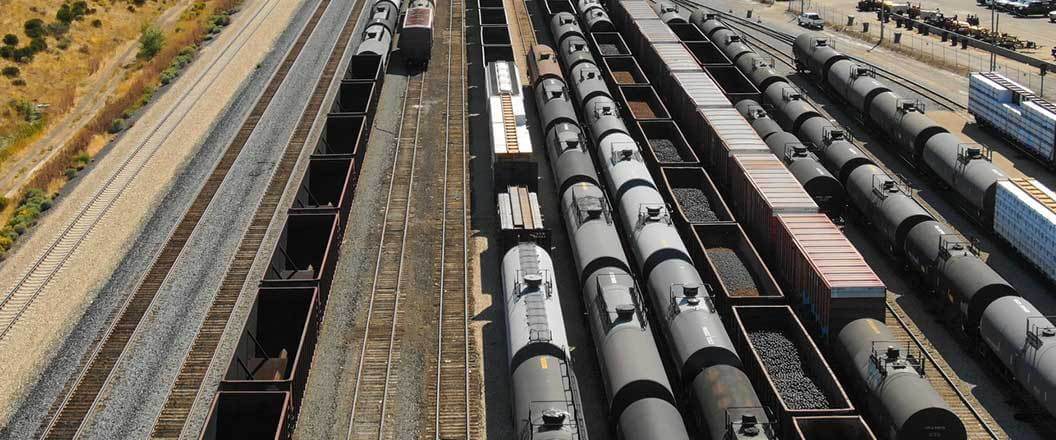
There are many kinds of freight that shippers will need to move using drayage services. Fortunately, rail drayage can accommodate just about every kind of freight that a shipper could have.
This includes:
When rail drayage is performed, different kinds of equipment will have to be utilized. Specially designed chassis are used to transport any type of containerized freight. Bulk cargo will have to travel in one of two types of trailers.
These are:
Liquid bulk cargo will travel within a tanker trailer while dry bulk cargo will travel within a pneumatic trailer. Thanks to these types of trailers and equipment, shippers can use rail drayage services regardless of what type of freight they have.
Some shippers get drayage and cartage services mixed up. Our article on drayage vs cartage will show you the difference.
Whether you need rail drayage, port drayage, or another other type of ground transport, USA Truckload Shipping can find you a reliable carrier to transport your freight. Our network of carriers spread throughout North America gives us the ability to accommodate the needs of our customers.
Our carriers are able to transport the following type of freight:
With these services, customers won’t be restricted in the types of freight they need transported. Fill out your truckload quote, a rail services quote, or contact our team at (866) 353-7178 for more information about the services we provide.
Test block
Domestic Incoterms are shipping terms that domestic shippers in the U.S. are using at an increasing rate. While they can be challenging to understand at first, the domestic version of Incoterms helps shippers and receivers in numerous ways.
Created by the International Chamber of Commerce (ICC), domestic Incoterms are used by sellers and buyers to understand one another better when conducting a transaction. The domestic version of Incoterms leaves out many of the international aspects of a sale and leaves in the aspects that are relevant to a domestic shipment.
Domestic Incoterms are extremely useful, but have various details surrounding them. We’ll show you how Incoterms for domestic shipping work and how to use them to your advantage.
Incoterms (international commercial terms) were created by the ICC to help buyers and sellers in different countries to better understand one another when conducting international transactions and shipments. Due to the various language and cultural boundaries between different nations, it can be difficult for buyers and sellers to understand each other.
Incoterms were designed to help avoid that confusion by clearly explaining the responsibilities of buyers and sellers of an international transaction. Although Incoterms were originally designed to help with international transactions, many buyers and sellers within the U.S. have used them for their domestic shipments.
The ICC created 11 different Incoterms that can be used when conducting international transactions. By having multiple Incoterms to choose from, buyers and sellers can settle on terms that best suit their needs.
ICCs 12 Incoterms are as follows:
Every 10 years, the ICC reviews Incoterms and determines if any changes need to be made. This allows Incoterms to meet the needs of buyers and sellers in the modern day. For example, the 2020 Incoterms made some key changes to the older 2010 Incoterms.
The new features of 2020 Incoterms include:
Even though the ICC updates Incoterms every 10 years, buyers and sellers can still use older iterations of Incoterms as long as both parties agree to do so. This applies to domestic shipments as well.
Domestic buyers and sellers that want to use Incoterms for domestic shipments will need to take special care when picking the Incoterm they want to use for their transactions. Since Incoterms were meant for international trade, buyers and sellers will have to view Incoterms from a domestic perspective.
Certain parts of Incoterms rules will no longer be applicable when they’re used for domestic shipping. For example, Incoterms delegate the responsibility of customs clearance for export and import to the buyer and seller differently. The party who takes on this responsibility differs based on the Incoterm that’s used.
Domestic shipments don’t need to take this factor into consideration since the goods have already made it into the country. That said, there are responsibilities delegated by Incoterms that domestic buyers and sellers will still have to focus on.
These include:
Each of these factors is important for domestic buyers and sellers to consider when negotiating their transactions with one another.
Another concern that buyers and sellers should consider before picking an Incoterm for domestic shipping is determining their needs. Buyers and sellers have different interests in mind when conducting a transaction. This can make determining which Incoterms should be used very difficult.
To make choosing a domestic Incoterms easier, buyers and sellers should consider how much control they want to have over the shipment. Some Incoterms delegate more responsibilities to the seller while others delegate more responsibilities to the buyer. There are also Incoterms that balance out the responsibilities between the two parties very evenly.
Therefore, buyers and sellers should express their needs to one another and then compromise on an Incoterm that satisfies both parties.
One important factor that domestic buyers and sellers will need to be on the lookout for is what mode of transportation the Incoterm that they choose covers. Certain Incoterms can be used for all modes of transportation, while others are only applicable for ocean and inland waterway transport.
For truckload shipments, buyers and sellers should look to the Incoterms that cover all modes of transport such as:
These Incoterms are a great place for buyers and sellers to start if they want to use dry van truckload shipping or some other truck-based service to move their goods.
As we’ve established, there are numerous Incoterms for domestic shipping that buyers and sellers can choose from. However, some domestic Incoterms are better suited for shipments within the U.S. than others. We’ve identified some Incoterms that are the most useful and explained why they should be used.
The first reason that FCA (Free Carrier) is great for domestic shipping is that it can be used for any mode of transportation. This means that shipments transported by truck can use this Incoterm. FCA places most of the responsibility for the shipment on the buyer.
When this Incoterm is used for domestic shipping, buyers and sellers receive the following benefits:
For international transactions, FCA would require sellers to take care of exportation proceedings for their goods. However, sellers don’t have to take care of this responsibility when FCA is used for domestic shipments.
This means that the seller only needs to make the goods they’ve sold available for pickup by the buyer’s carrier. Although buyers have more responsibility placed on them by the FCA Incoterm, there are certain responsibilities they won’t have to fulfill. Similar to the seller, buyers won’t need to worry about taking care of the customs formalities associated with importing.
However, buyers will have to take responsibility for the logistical aspects of the shipment. Buyers will be able to pick a carrier and shipping option that works best for their needs.
DDP (Delivered Duty Paid) is an Incoterm that’s very similar to the FCA Incoterm. What sets them apart is that DDP places most of the shipment responsibilities on the seller rather than the buyer of the goods. Essentially, DDP is the complete opposite of the FCA Incoterm. Therefore, sellers have more control over the shipment instead of the buyer.
Two responsibilities the seller won’t have to worry about when using this Incoterm for domestic shipments include:
With these two responsibilities out of the way, the seller can pick a carrier and shipping option of their choosing.
For domestic buyers and sellers that are concerned about insuring their goods while they’re in transit, CIP (Carriage and Insurance Paid To) is an Incoterm that they should explore. When CIP is used for international shipments, the seller is responsible for export formalities while the buyer is responsible for importation formalities. Fortunately, neither buyer nor seller will have to worry about these responsibilities when this Incoterm is used for a domestic shipment.
The seller will only have to focus on the following:
The buyer only has to receive the goods when they arrive. Freight insurance is the main provision that makes this Incoterm appealing when using it for domestic shipments. There are many dangers that freight can be exposed to when traveling domestically as the table below shows.
| Amount of Boxes That Arrive Damaged | 10 Percent |
| Amount Lost Due To Theft | $15 to $30 Million |
| Amount of Packages Lost Each Day | 1.7 Million |
Provided by: Business Insider, Freight Waves and Premier Packaging
Having insurance on goods will ensure compensation if a shipment falls victim to a disaster. We have an article on how to reduce transit damage that will help you better protect your shipment.
Incoterms aren’t required, regardless of whether they’re used for international or domestic shipping. Therefore, buyers and sellers are able to choose other options when working out the details of a domestic shipment.
One popular option is to use the domestic FOB trade term. While the ICC allows importers and exporters to use FOB for international shipments, shippers within the U.S. use their own version of this Incoterm@ for domestic purposes. The U.S. version of FOB has a few different variants that shippers can choose from.
These variants include the following:
Based on the needs of buyers and sellers, one of these domestic FOB variants will be able to meet their needs. The domestic FOB also allows freight to be shipped using any mode of transportation.
When it comes to moving freight domestically, you’ll need the right shipping documents. Our article on documents required for domestic shipping will show you what you’ll need.
At Truckload USA, we can help you ship just about any type of freight that you need to move. As a 3PL provider, we have connections with various small carriers all over the country who can move your freight from one point to the next.
The shipping services we provide at Truckload USA include:
No matter what type of freight you need to transport, our team of carriers are able to move it. If you’re ready to ship your freight, then fill out your quote below or give us a call at (866) 353-7178 for further assistance.
A container chassis shortage impacts several areas of shipping and logistics. The availability of this simple metal frame affects everything from container availability to distribution schedules. Resolving this shortage has become a major concern for both trucking and marine shipping.
The National Highway Traffic Safety Administration (NHTSA) enforces federal safety regulations on all commercial trailers, including container chassis. Between increased use and a backlog in domestic production, fewer road-worthy chassis are available. This shortage is further hurt by poor management of container movements.
Discover the biggest influences of the truck chassis shortage and how businesses can navigate its effect on the supply chain.
Supply chain shortages and production delays have become somewhat normalized in our post-pandemic world. However, when it comes to a shortage of equipment vital for supply chain movement, things get a little tricker.
Planning for and managing the container chassis shortage isn’t the responsibility of any one group. The shortage has a different effect depending on where your business falls along the supply chain.
Groups most impacted by the shortage of chassis include:
Each of these groups has attempted to solve the chassis shortage issue in different ways. Despite these efforts, shortages are still a major problem that ends up affecting the consumer market at some point.
Without truck chassis to haul marine shipping containers on land, two major issues come up. First of all, without port chassis, containers coming off ships can’t move out of the port. Secondly, if drayage yards can’t get chassis, they are unable to return empty containers back to the port.
Full containers at port mean empty store shelves for customers. Empty containers in truck yards mean higher prices for customers. This is from carriers dealing with demurrage and detention fees from ports that want their containers back.
To understand the depth of the problem, we’ll go into detail about some of the practices and events that triggered it.
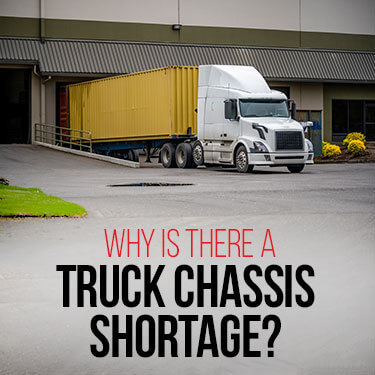
There is no single reason for the drastic container chassis shortage currently affecting the United States. For the most part, it’s just a bad combination of factors made worse by the effects of the Covid-19 pandemic.
Some of these factors include:
To be clear, the U.S. has always had a shortage of container chassis. Despite the nation’s position as a major importer and exporter, our ports are not known for their efficiency in handling containers when compared to European and Asian counterparts.
This is partially due to a lack of emphasis on drayage services, which didn’t become popular until recently. After major ports started experiencing record-setting delays, drayage became the preferred solution to ease some of the congestion.
However, carriers quickly realized that there just wasn’t enough chassis to go around. Quite suddenly, chassis shortages went from being a seasonal annoyance to a year-round headache.
With the rise of eCommerce during the pandemic, and its continued push, shipping activity simply hasn’t slowed enough to provide relief. Quite honestly, it isn’t likely to either which only increases the pressure on an already strained system.
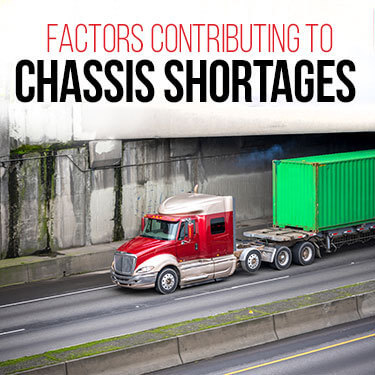
We previously mentioned long-standing factors that mostly became problems after chassis demand increased. There have also been more recent developments that further contribute to the issue.
One of these is the rise in eCommerce, mentioned earlier. This has been good for the shipping industry as a whole, allowing companies to expand and hire more people. That said, it’s been a hard trend to keep up with.
Other recent factors include:
On their own, these factors may have been solvable. Together, and combined with the existing issues, solutions are harder to come by.
An ELD is an Electronic Logging Device provided for truck drivers to track their working hours and loads. The ELD Mandate is a congressional rule of 2016 that requires a specific level of technology to be used by commercial drivers with Hour-of-Service (HOS) limitations.
These drivers are required to submit a Record of Duty Status (RODS) to the Department of Transportation (DOT) to show they are remaining within legal limits. The implementation of the ELD mandate was meant to place driver safety first and ensure good working conditions.
With that said, there are drawbacks to the close monitoring of loads and hours. To avoid penalties and fees, limits on drivers are strictly enforced, which affects chassis and container movement.
Prior to the regulation, a driver may have been able to take on an extra load or two, even if just to return empty containers and chassis to the port from a drayage yard. With the extra monitoring, such movements simply aren’t possible.
Building or importing more chassis seems like a logical response to a shortage, but high steel tariffs make that difficult too.
Building new chassis requires steel and iron, which the U.S. imported large amounts of from China until a series of new tariffs in 2018 made it extremely expensive to do so. Referred to as Section 301 and Section 232 tariffs, these imposed up to a 25% tax on various products, including steel.
These tariffs also included various finished products, including whole chassis from China. This means importing the finished product becomes more expensive too.
Ultimately, there is a trickle-down effect of negative impacts.
At the end of the day, it doesn’t paint a very good picture for carriers desperately seeking ways to move containers. It actually encourages bad habits because some carriers and retailers will hold onto chassis longer than they should just to ensure they have one when needed.
The good news is that steel manufacturing is picking up more speed as the U.S. increases its metal imports from other countries such as Canada and Mexico. The progress may be slower than some prefer, but it is progress.
Depending on who you ask, you will hear that there is a surplus or a shortage of marine shipping containers. Depending on where you are, both scenarios are correct.
The U.S. has more issues with surplus containers, as do many countries that tend to import more than export. It’s always been a standard practice to send empty containers back on ships, but now they’re piling up faster than they’re being returned.
Because ports are individually managed, it’s not easy to find national numbers. However, we can get a basic look at this trend by examining some statistics out of the Port of Los Angeles and Long Beach, one of the busiest in the country.
| Month | Incoming Containers | Outgoing Containers | Remainder |
| January | 428,474 | 437,121 | -8,647 |
| February | 426,812 | 430,951 | -4,139 |
| March | 497,775 | 460,898 | +36,877 |
| April | 458,264 | 429,093 | +29,171 |
| May | 501,679 | 466,220 | +35,459 |
This is only a small slice of the data, from only one port, but it shows a worrying trend. At the start of 2022, more containers were leaving than arriving. The number included both loaded and empty containers.
By March, there was a large jump in imports that could not be matched in exports. The problem has since gotten worse. This isn’t happening only at Long Beach ports, but on the East Coast as well at ports like New York and Savannah.
With so many containers piling up, both full and empty, drayage yards simply have no place to return other empties and bring back chassis. Meanwhile, ports are charging demurrage fees for containers being left at port and more fees for chassis not being returned. It’s turned into quite a vicious cycle.
Improving container management would ease the problem. Major carriers and 3PLs are investing in software programs like Container Management Systems (CMS) and improving freight tracking technology in general. By tracking where delays occur, they hope to reduce them and keep containers and chassis freely circulating.
The simple answer here is to say that the container chassis shortage will continue until enough new chassis are manufactured and made available.
After all, a chassis is a fairly simple piece of equipment and has been standard logistics equipment for decades. Although the solution seems simple, the reality is not.
The new production of chassis is limited by:
Although tariffs are highest on steel imported from China, it’s still taxed when it comes from other nations too. Even when the small numbers of factories in the U.S. can get materials, there aren’t enough people entering the industry.
New chassis also don’t solve the existing issues and bad habits of some retailers who hang on to chassis longer than they should. In short, there are many things still to overcome.
In the meantime, there are some alternatives to moving shipping containers that don’t involve a chassis. Lowboy and step deck flatbed trailers have been used successfully to move shipping containers.
Although not an ideal solution, they provide a short-term alternative while production efforts increase.
The majority of chassis in North America are owned by Intermodal Equipment Providers (IEPs). These are essentially equipment leasing companies and they provide short and long-term leases to various ports, carriers, and 3PLs.
Some smaller IEPs have actually come together to form the North American Chassis Pool Cooperative (NACPC). All combined, they account for the grand majority of current chassis and have the most pull when it comes to newly manufactured units.
Motor carriers can and do own chassis, as do some ports, but this is an exception. Although, more have been trying to do so as a way to combat shortages. Chassis rental charges themselves depend on a number of factors.
There are four common chassis leasing and use models:
All of these models have their pros and cons, but no single way seems to be able to solve the current issues.
Government oversight also doesn’t help in this situation. While the NHTSA and by extension, the Federal Motor Carrier Safety Administration (FMCSA) regulate the quality of chassis, they have no other authority over their use.
This is one of the reasons the U.S. Government Accountability Office (GAO), conducted a study that looked more closely into chassis use practices.
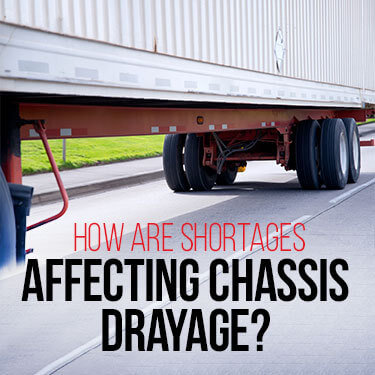
The United States, along with Canada and Mexico, use flatbeds and dry van trailers for the majority of items shipped by truck. Therefore, chassis are rarely used for long-haul jobs. A chassis’ most common use is for drayage services.
Drayage providers focus on short-haul services between larger and more established transport modes. A shortage of chassis has a bad effect on either end of that spectrum.
Drayage links two important services together:
We’ll examine how the shortage has affected these areas and how the wider market is impacted.
Port congestion is an issue all on its own. Between lockdowns of various ports and unavailable workforces at different points throughout the pandemic, port logistics have seen more than their fair share of problems.
Increased drayage helped relieve some of the congestion at ports up until a certain point. To be fair, the blame isn’t solely on the container chassis shortage. Drayage providers have also been unhappy about the lack of oversight on containers themselves.
Shipping containers are mostly overseen by the Ocean Carrier Equipment Management Association (OCEMA). However, containers themselves are usually owned by shipping companies. Without clear regulation from either group, the status quo tends to remain.
This had led to a few major issues for chassis and drayage services at ports:
For drayage to work, there needs to be enough available chassis and drivers to continue ferrying containers back and forth. Without freedom of movement, drayage services also become a problem.
Carriers and 3PL services alike are left to battle it out at the start of the day for the few openings that become available. Then they have to hope that their return trip isn’t in vain and that the port will accept the empty container and maybe even have another full one that can be shipped out.
Drayage services are a vital part of intermodal shipping too. Aside from making transload possible, drayage connects ports to the vast network of rail lines that crisscross the United States.
Shipping containers can typically be loaded straight onto specialized rail platforms that serve the same function as a chassis. This means goods don’t need to get transferred from one type of container to another.
Most rail yards actually do have the equipment to get a container off of a chassis, so they are less likely to hold onto the in-demand equipment.
This efficiency is good, but working with the railroads comes with an additional set of chassis regulations from the Association of American Railroads (AAR). All chassis that are used around rail yards must meet or exceed AAR chassis trailer standards.
The AAR has the strictest chassis regulations in logistics, which are great for safety, but bad for a limited and aging chassis pool.
Strict regulations on chassis structure and integrity are difficult to meet under some of the circumstances we’ve already reviewed.
There is a small gap between the standards set by the FMCSA and those set by the AAR. Manufacturers know that trucking companies will be satisfied with the FMCSA standards and the IEPs who buy the majority of them know that as well.
While not unsafe, they will be rejected by rail yards and intermodal shipping services. Rejected containers mean the chassis is once again stuck and train cars are chugging away at less than capacity.
Who ultimately pays for it? The price hikes end up falling on everyday consumers who are still waiting for store shelves to be fully stocked.
If your business needs intermodal shipping services, the best way to avoid having your freight rejected at the rail yard is to work with reputable carriers and 3PLs. Going with the cheapest bid may cause you to lose out on value-added services and quality equipment.
Don’t let a container chassis shortage bring down the mood. USA Truckload Shipping, powered by R+L Global Logistics, has connected with over 22,000 partner carriers throughout North America.
We vet our carriers for quality service and equipment so that you don’t need to. We’ve worked hard to provide reliable port drayage services at major shipyards from California to New York. Trust your business needs to a company that’s been offering solutions for years.
Need more than just drayage? Complete an RFP online now and view our other available services:
If you need it moved, we have the connections to help you move it. Call us today at (866) 353-7178 or request a risk-free quote online today.
How to ship appliances according to Whirlpool:
Appliances are common goods that perform essential functions that you can find in almost every home. For these reasons, appliances are always in demand by consumers. Even before the pandemic, sales of appliances were on the rise.
| 2015 | $40.14 |
| 2016 | $41.47 |
| 2017 | $43.33 |
| 2018 | $44.23 |
| 2019 | $45.69 |
Since there is so much demand for appliances, it’s important to know how to ship them safely to keep your customers satisfied.
Need help shipping an industrial sewing machine? Check out our article.

Before you start preparing your appliances for shipping, you should first obtain some items you’ll need to prepare and pack your appliances. First, get a few cleaning supplies that you can use to freshen up your appliances before packing them up. Some cleaning supplies you should use are:
These materials can be used to clean just about all kinds of appliances, whether they be stainless steel or not. Next, you’re going to need some materials that you’ll use to pack your appliances. These materials are:
Appliances can still sustain damage when they’re shipped within the confines of a box or crate. To prevent this from happening, use any of the packing materials listed below to make sure your appliances receive the protection they need for their journey:

Now that you have all the materials you’ll need to move appliances, you can get down to preparing them for shipment. These steps will ensure that your appliances look pristine and excellent condition when they arrive at their destination.
The first part of preparing appliances for transport is cleaning them thoroughly. Used appliances will need cleaning the most, but even brand-new appliances that have yet to be used can benefit from being spiffed up a bit.
Cleaning the surface appliances is fairly easy. Simply apply whatever cleaning solution you’ve chosen to the surface of the appliance. Then, start scrubbing the solution in with some type of non-abrasive cloth. When it comes to cleaning the interior of appliances, the steps you’ll follow will get a bit more lengthy.
For example, you’ll need to do the following things to clean the inside of a refrigerator:
Removing the items within an appliance to clean them separately is a procedure that applies not only to refrigerators but to other types of appliances like ovens, air fryers and certain types of toasters. That said, the cleaning procedures you’ll have to follow when shipping a washer are much different and more complex. To keep the inside of a washer clean, you’ll have to do the following:
Any appliances that come with attachments will need to have their attachments removed and cleaned separately as well. Appliances with attachments on them include the following:
Shipping off new appliances that have been freshly cleaned is a great way to leave a good impression on a retailer or customer who ordered the appliance.
Check out our article on domestic Incoterms so you and your receiver can better understand each other.
Disabling power to the appliances you want to ship is pretty simple. First, make sure that your appliance is not in operation and is switched off. Afterward, simply disconnect your appliance from its power source.
Most appliances are plugged directly into an electrical outlet, but some use gas as their source of power. Regardless of how your appliance is powered, be sure you disconnect them from the power source safely and correctly.
When you need to ship a washer and dryer, you’ll need to take the added step of disconnecting the washer from the water source. You can typically find the valves that control the water source on the wall behind the washer.
Once that’s done, you can remove the hoses of your washer. There will be some leftover water in these hoses, so it’s important to make sure that you drain the hoses completely. Any leftover water will likely leak, causing the box holding your appliance to get soggy and weakening its integrity.
When it comes to shipping large appliances, you’re going to have to deal with securing attachments that come with them. Some of the loose parts that come with various appliances include some of the following:
Some loose parts and attachments can be shipped while attached to the appliance while others can’t. If you can secure an attachment to an appliance without the attachment bouncing around or coming loose, then you won’t need to ship it separately. Cords that are attached to your appliance are a bit trickier to secure. One simple solution is to use some painters to tape the cord to the appliance.
Washing machines, also pose a unique challenge for this part of the shipping process. That’s because the washer’s drum is likely to swing around inside the washer while the appliance is in transit.
This can cause potential damage to the drum and the inside of the washer as well. To secure the washing drum, simply follow these simple solutions:
Any of these options will keep the drum safe while it’s in transit.
Check out our article on how to negotiate freight rates once you're ready to ship.

Now that you’ve made all of the necessary preparations to ship your home products, you can now move on to packing them for transport. Packing your appliances safely is the only way to guarantee that they will be protected from most impacts that can cause them damage.
The first step you should take when packing your appliances for transport is by packing loose parts and attachments for appliances separately. If you’ve determined that you can’t secure attachments to your appliance, then follow these steps:
Attachments that can be secured to an appliance can be packed with the appliance they correspond with. This can be done by placing the attachment onto the appliance and wrapping the entire object in packing material. Another option would be to secure the attachment with tape and then wrap the object in your chosen packing material.
Packing the appliance in its entirety is similar to packing appliance attachments, but with some extra steps that can vary by appliance. The steps that you should take are:
Using the stretch wrap to close the doors or hatches is something you’ll only need to do for certain appliances like coffee makers, certain types of toasters, air fryers and refrigerators. This part can be skipped if the appliance you’re shipping doesn’t have these features.
When wrapping large appliances with packing materials, make sure you have enough to cover the entirety of the product. Measuring the dimensions of your appliances will help you discern how much packing material you’ll need to cover them.
The hardest part of packing your appliance is getting it inside its box. While this might not be particularly difficult for lighter appliances, heavier ones like stoves, refrigerators and washers and dryers can be challenging. To do this, make sure you have some assistance from another person.
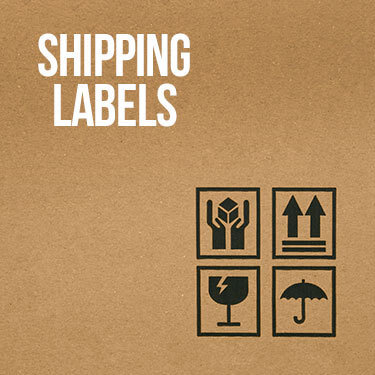
After all of the packing, proceedings are taken care of, you can start to place shipping labels on the outside of the box. Fortunately, shipping companies don’t require too much on the box of an appliance to perform their delivery services. A simple shipping label with the following information will be more than enough for them to determine where the freight you’re sending needs to go:
As long as shipping labels have this information printed on them, it doesn’t matter what format the shipping label is in. Some labels that you should include to communicate the fragile nature of your appliances are:
For some appliances, you might want to put labels saying “THIS SIDE UP” with arrows pointed in the upward direction. You might be able to find boxes that have these warning labels already printed on them.
Palletizing your appliance shipments is an option that you can explore. When deciding whether or not to palletize, you should consider the following factors:
If you plan to ship one or a few small appliances like a coffee maker or crock pot, then you can ship your goods off as a non-palletized LTL freight shipment. However, large quantities of small appliances or large appliances should be transported on pallets.
A pallet will help for shipments like these because they:
Additionally, pallets are useful when you need to ship an FTL appliance shipment.
Having the right paperwork for a domestic freight shipment is essential, regardless of what type of freight you’re shipping. Many of the documents needed for a domestic freight shipment are easy to find and fill out. The purpose of these documents is to communicate information needed by both the carrier providing the shipping services and the receiver of the freight.
Hazardous goods can be a real pain to ship due to all of the regulations surrounding them. Unfortunately, certain appliances are considered HAZMAT and you will be required to follow all related regulations if you want to ship your goods successfully.
A common appliance that is considered HAZMAT is refrigerators. If you’ve determined that the appliance you’re shipping is hazardous, you’ll need to follow the HAZMAT regulations enforced by the Department of Transportation (DOT) outlined in Title 40 of the Code of Federal Regulations (CFR).
Some of the responsibilities that will be expected of you as a shipper of hazardous goods include:

As you’ve probably noticed, shipping large appliances is no easy task, especially when it comes to unloading them or installing them in your home. A customer that has ordered an appliance from you might have trouble with these aspects of the shipping process. One thing that you might want to offer to them to make their lives easier and establish a good relationship with them are white glove services.
This type of service is offered by various carriers and caters specifically to customers who have ordered large appliances. The service works by delivering an appliance to a place of business or a customer's home. Afterward, the delivery men perform the installation service on the customer's behalf.
We’ve already discussed how handling the wiring and hoses on appliances like refrigerators and washers when shipping can be a hassle. Installing them after they’ve arrived can be just as troublesome. Therefore, offering white glove delivery is one way you can provide some much-needed help to a customer.
You can learn more about this service in our article on white glove appliance delivery.
At USA Truckload, we ship just about all kinds of freight. Whether you have an FTL shipment or an LTL shipment, one of the many small carriers that we partner with can transport your appliances wherever they need to go. Some of the carriers that we partner with can even transport your freight and provide white glove delivery services.
In addition to our array of reliable partners, we provide shipping insurance. Even when you pack your freight correctly, freak accidents can always occur and potentially damage your goods. It’s important to have the coverage you need in case such an incident occurs.
Another service that we offer that our customers have found useful is consulting services. At USA Truckload, we understand how daunting shipping freight can be. With our consulting services, you can ask one of our professionals any question you have in regard to shipping appliances.
If you’re ready to ship your appliances, fill out your quote immediately. If you have questions you’d like some answers to, reach out to our team and ask about setting up a consulting session at (866) 353-7178.
Knowing the fine details of Costco pallet requirements is essential if you want to become one of their vendors. Like many retailers around the country, Costco has a specific set of guidelines that palletized freight shipments have to follow. Fortunately, pallet requirements for palletized Costco freight can be easily broken down into some simple steps.
Key Takeaways:
We’ll explain the specifics of Costco’s pallet requirements so you can successfully ship your palletized goods to them.

The first thing you need to do when following Costco’s requirements for palletized freight is to obtain a pallet that they’ll accept. There are a few general rules that your pallet will need to abide by. Additionally, all Costco pallets must meet a heat treatment requirement to be accepted.
When picking out a pallet or pallets to use for your shipment of freight to Costco, you’ll need to make sure that it has some of the following characteristics:
While pallets have a size limit of 48”X40”, you can choose to use pallets that have smaller proportions than this. That said, you should make sure that whatever pallet you use will be able to hold the freight that you’ve loaded onto it without there being any overhang.
Costco also requires vendors to ship palletized freight on pallets made by specific companies. The type of pallets you use and which company makes them will be determined based on the location of the Costco you’re shipping freight to. The pallet companies you can use and when to use them are listed below:
There are some occasions where using pallets made by the companies listed above won’t be an option for you. Some instances where this might occur could be when you’re transporting oversized goods. In situations like these, you’ll need to obtain approval from Costco in advance. Once you’ve gained approval, you’ll be permitted to use purpose-built pallets for your shipment.
Another requirement that you’ll need to fulfill when shipping goods to Costco are the International Standards for Phytosanitary Measures No. 15 heat treatment requirement. Also known as ISBM-15, this regulation must be met when transporting freight on wooden pallets internationally.
Various insects and diseases can be found within wooden materials like pallets. When a pallet comes from another country, it could carry these pests within them. Once they arrive in a new country, the insects and diseases within the pallet can spread and start to wreak havoc on the plants and ecosystems of the country the pallet arrived at.
The ISPM-15 regulation requires wooden packing materials such as pallets to undergo heat treatment to avoid scenarios like these. To satisfy this regulation, two procedures need to be performed on the pallets. The two options are:
Most pallets are made from a variety of different woods, with two different species being the most common. We’ve listed these two common wood species and the percentage pallets made from them.
| Pine | 18 percent |
| Oak | 17 percent |
Either of these options will suffice for this regulation and once completed, the pallet can receive the ISBM-15 stamp of approval. The only time you won’t need to complete this requirement is if you’re shipping freight to Costco on iGPS plastic pallets.
Check out our articles on Walmart pallet requirements and Amazon pallet requirements if you’d like to have more options on where you want to send your goods to.
Before you can start loading your freight onto a pallet, you’ll need to complete one more requirement. Costco requires that the packaging of all palletized freight sent to them must pass the International Safe Transit Association (ISTA) pre-shipment tests.
There will be two pre-shipment tests in particular that your packaged shipments must be able to pass:
ISTA 1A is used to determine if the packages being shipped are durable enough to last while it’s in transit. This test, in particular, is applied to individually packed products that weigh 150 pounds. During the ISTA 1A test, your packages will go through vibration and shock testing.
The ISTA 3E test is designed specifically for palletized freight shipments. This test simulates the shipping environments that palletized shipments will be subject to while they’re in transit. Like the ISTA 1A test, the ISTA 3E test subjects palletized loads to vibrations and shocks to check their integrity.
To get your shipment certified by the ISTA, you’ll need to become an ISTA member. Once you do, you’ll just need to follow their transport testing laboratory certification procedures. ISTA provides videos for this procedure that easily explain each step.
An ISTA certification will show that your palletized shipment of packages can withstand vibrations and shocks while in transit. That said, Costco also requires that the packages you use are strong enough to withstand some of the other factors that they could be subjected to, such as:
You’ll have little to no control over what environments your packages will go through while in transit. Therefore, it’s imperative for the well-being of your goods and to obtain acceptance by Costco that you make sure that the box or boxes carrying your goods can survive these environments.
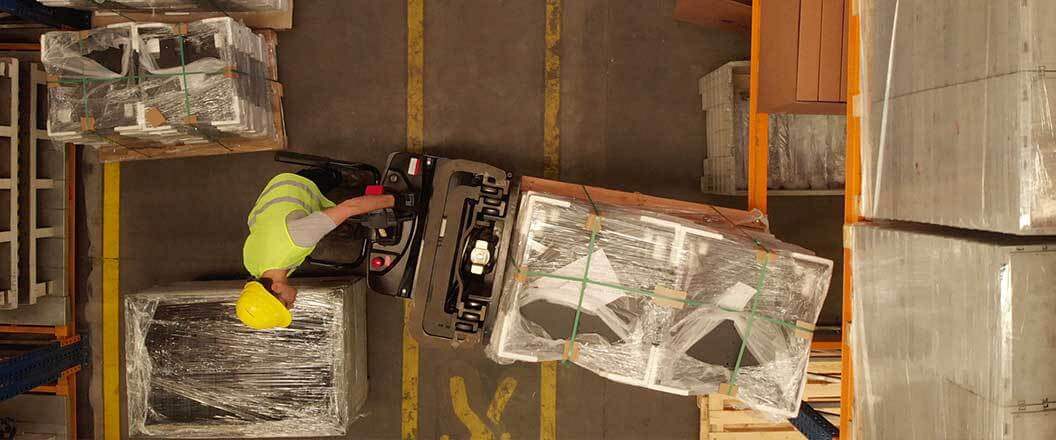
Once you’ve obtained a pallet that’s accepted by Costco and ensured that they’ve passed the ISTA 1A and 3E tests, you can begin preparing your shipment for loading. Costco has some fairly specific guidelines for loading pallets, so you’ll need to make sure you follow them accordingly.
The first step of Costco’s loading procedures you’ll need to take care of is their stacking procedures for palletized shipments. In particular, Costco is concerned with the ability to stack freight on pallets to withstand the weight. Costco’s requirements for stacked freight on a pallet are as follows:
While 751 pound palletized shipments must be able to hold 2,500 pounds on the bottom layer, Costco doesn’t accept palletized shipments with a total weight heavier than 2,500 pounds. Freight can be stacked on a pallet using a variety of different methods. Costco doesn’t specify which stacking method you should use in particular, but there are a few good rules to go by when you start stacking:
Having heavier packages on the bottom will prevent you from crushing lightboxes. Heavy boxes on the bottom layer can also better withstand weights of 1,500 to 2,500 pounds. One last Costco requirement that you’ll need to consider when stacking freight onto a pallet comes in regards to display-ready packaging.
Costco requires that these types of boxes at least have the display-ready part facing outward on the 48” sides of the pallet. If possible, Costco recommends the display-ready side facing outward on both the 48” and 40” sides.
Costco requires that all palletized shipments sent to them adhere to strict load dimensions. These guidelines are:
Overhanging freight on a pallet can cause the freight loaded on it to be damaged. Likewise, freight that has an underhang could weaken the integrity of your stacked freight. Costco recommends using a pallet footprint of 47.4”X39.5”.
The footprint is a supply chain term used to describe the width of a pallet. While you don’t have to use this specific footprint, it will help you maximize space.
Layer sheets are an item that is often used when palletizing freight. The purpose of layer sheets is to give your palletized load more stability. Costco requires layer sheets for some, but not all, palletized freight shipments that are sent to them. The palletized shipments that do require layer sheets are:
First, we’ll discuss Costco’s layer sheet guidelines for palletized shipments of display-ready corrugated packaging. For these types of palletized shipments, apply layer sheets in the following manner:
The layer sheet requirements for palletized bagged products are a little bit more simple. Simply place a sheet on the bottom layer of the product and the top of the loaded shipment.
The last part of Costco’s pallet loading requirements that you’ll need to suffice is the securing requirements. As with the layer sheet requirements, Costco’s pallet load securing requirements vary based on the freight that’s being transported on the pallet.
Costco has specific securing requirements for the following types of palletized freight shipments:
The requirements for products in display-ready corrugated packaging and products in fully enclosed corrugated shipping containers are the same. To secure this form of palletized freight shipment follow these steps:
Costco recognizes how difficult it is to secure bagged freight to a pallet. Therefore, they allow shippers of freight to use one of three options to secure their bagged freight to a pallet. These options are:
Any of these three options are allowed by Costco when shipping palletized bagged shipments. To get information on some universal shipping practices, check out our article on 12 common shipping mistakes.

Costco doesn’t explicitly state which documents should accompany a palletized load, but it’s safe to say that you should include all of the essential shipping documents with your load. The essential documents that you’ll need include the following:
If your palletized shipment has hazardous materials within its contents, you’ll need to include the appropriate hazardous materials paperwork. Our article on documents required for domestic shipping will provide you with more information.
If you’ve got a palletized load that you need to be shipped to Costco, USA Truckload Shipping can help you get it there. We partner with numerous small carriers all over the country to accommodate our many customers. We offer standard truckload shipping for normal palletized loads. However, we also have refrigerated shipping partners that move your cold or frozen palletized goods.
Another service that we provide is freight insurance. Palletizing your load to Costco’s standards is important to keep your freight safe. That said, there’s always a possibility that something could go wrong and that your shipment could suffer damages. Freight insurance will keep you protected should something like this occur.
If you’re ready to ship, fill out your quote or call our team at (866) 353-7178 if you have any questions.
Transporting lithium batteries is a service that carriers all across the country have to perform for us to keep our electronic devices powered on. Whether it’s our car or computer, lithium batteries are used by people all across the U.S. for one reason or another. However, you can only ship this type of battery if you follow some of the fairly strict shipping regulations that accompany them.
Key Takeaways:

The way lithium batteries are transported can vary. Some of the most common ways they’re transported include in one package, multiple palletized packages, or within the confines of a powered device or vehicle. Lithium batteries can also be shipped using different modes of transportation, the two most common within the U.S. being air and ground shipping.
Air shipping is notorious for being extremely fast and efficient. However, regulations for shipping lithium batteries by air are very strict. For example, lithium metal batteries in particular cannot be transported in a passenger aircraft as cargo, unless packed in a device they provide power for.
Another regulation for air shipping lithium-ion batteries is that they can only be shipped off if they’re at a charge no higher than 30 percent. If air shipping is the mode of transportation you want to use, you need to make sure that you follow these regulations. Not complying with air shipping regulations can cost you up to $27,000.
Ground shipping is another great method for transporting lithium batteries. Ground shipments are transported by trailer or within the confines of a delivery truck that make stops in residential areas. While transporting lithium batteries by truck will still require you to follow regulations, they won’t be nearly as strict as they would be by air.

Despite batteries being relatively safe, there are quite a few risks that can make transporting lithium batteries dangerous. Some of the potential risks, while rare, could occur during transit:
Lithium batteries are susceptible to high temperatures. If the batteries start to overheat, a process called thermal runaway begins to take place. Thermal runaway is when the internal temperature and pressure of a battery start to rise. When thermal runaway occurs in one battery cell, it will spark a chain reaction of thermal runaway in the other battery cells near it.
This can cause lithium batteries to explode or catch fire. While rare, lithium batteries can also leak the hazardous materials that are carried within them. Its risks and dangers like these that are the reason there are so many rules for transporting lithium batteries.

The Department Of Transportation (DOT) is the federal agency responsible for all regulations when it comes to transportation. To ship your lithium batteries across the country, you’ll have to do your part as a shipper to follow their rules.
DOTs regulations for transporting lithium batteries are located in Title 49 of the Code of Federal Regulations. Subpart 173.185 is where the specific regulations for lithium cells and batteries are located at. The responsibilities are highlighted in 173.185 of Title 49 of the CFR can be broken down into the following steps.
In addition to these steps, there are also separate regulations for transporting lithium batteries for disposal and regulations for transporting damaged, defective and recalled lithium batteries. For the sake of this article, these regulations will apply to lithium ground battery shipments.
The first DOT requirement that you will need to satisfy is the testing regulations. For lithium batteries to be offered for transport, they have to pass specific design tests prescribed by the United Nations Manual of Tests and Criteria. Section 38.3 of the UN manual is where lithium cell and battery tests are located.
These tests simply verify that the batteries can be transported and can make their way through the supply chain without incident. You can verify with the manufacturer of the batteries, distributor or vendor to find out whether or not the batteries have passed these tests. However, DOT still requires that you make test summary documents available upon their request.
There is some basic documentation that every truckload shipment is going to need. However, to ship lithium batteries across the country, you’re going to need to include an additional document called a Lithium Battery Safety Document.
This document is used for both air and ground shipments. On the document is a table with information about lithium ion and lithium metal batteries. Simply check off the boxes that correspond with information listed on the sheet if it matches your lithium battery shipment. Afterward, you only need to give your phone number, name and address.
The Lithium Battery Safety Document is easy to fill out and easy to find, as most carriers have a copy of the document on their website.
The packaging requirements that DOT stipulates can differ based on the characteristics of the lithium batteries that are being transported. Below is a list of the shipping guide numbers for lithium batteries:
You only have to figure out which guide best describes your shipment of lithium batteries to determine which one applies to you. Packaging requirements for each type of lithium share many similarities.
The packaging requirements are essential to ensure that the lithium batteries receive the best possible protection. One stipulation that each of these guides demands is that the inner packaging of the container must be made of some type of non-metallic material.
These materials must protect the battery or cell from coming into contact with electrically conductive materials. Another common theme across each of these guides is that the batteries or cells must be packed tightly together. Doing so will prevent them from shifting while they’re transported.
Beyond these two recurring regulations, guides 01 through 08 have slightly varying regulations among each other.
Hazard communication requirements refer to the marks and labels that will need to be attached to the box that your lithium batteries are traveling in. Like the packaging requirements, hazard communication guidelines can differ based on which shipping guide you’re going by.
That said, one thing that you can expect to place on the package holding your lithium batteries is either the class of hazardous materials or the label with the UN ID number that applies to it. Typically, the guides that apply to fully regulated cells and batteries are the ones that require the hazard label which would apply to the following:
Lithium batteries fall under miscellaneous hazard class 9. For lithium battery shipments that fall under the even number guides, you will need to include the UN ID number. Those guides are the following:
In addition to lithium battery shipments with the class nine hazard label, the UN ID number must also appear in the center of the box accompanied by the proper shipping name. The sample UN specifications package marking also needs to appear in the left bottom corner of one of the sides of the box.
Shipping lithium batteries off for disposal or to be recycled is a bit easier than it normally would be for regular shipments of lithium batteries. There are two exemptions from subpart 175.185 of the Title 40 of the CFR that lithium battery shipments for disposal or recycling are afforded. These exaemtptions are:
However, these exemptions will only apply if the batteries meet the conditions prescribed by the “fully regulated cells and batteries” shipping guides. If the lithium batteries you’re shipping to dispose of or recycle meet the “smaller cells and batteries” criteria, then the exemptions don’t apply.
Lithium battery shipments that qualify as damaged, defective or recalled are only permitted to be transported by ground. Other than this stipulation, batteries that are damaged, defective or recalled must be shipped by the regulations provided by the shipping guides we discussed above.

Whether your shipment of lithium batteries is traveling as non-palletized freight or palletized freight, the DOT regulations will be the same. However, when it comes to transporting palletized shipments of hazardous materials, pallet requirements might vary depending on the retailer or store you’re sending the batteries to.
Retailers and stores are very particular about how they want freight secured to pallets and where labels should be placed. Fortunately, you can abide by both DOT lithium battery regulations and the pallet requirements dedicated by the store or retailer you’re shipping the lithium batteries to.
Two common places you might be sending palletized shipments of lithium batteries to are Amazon and Wal-Mart. We happen to have articles on Amazon pallet requirements and Wal-Mart pallet requirements if you need to get batteries to either of these businesses.

We’ve discussed what can go wrong when transporting lithium-ion batteries, as well as the regulations that are supposed to prevent them. Nonetheless, transporting lithium batteries still comes with risk and danger, even if all the proper regulations are fulfilled.
There’s a chance that another piece of freight in the trailer traveling with your batteries could fall on top of them, damaging the box and the batteries inside. A liquid shipment could also spill and soak the box holding your lithium batteries. Therefore, it’s best to get some added protection for your shipment by obtaining insurance that will compensate you if an incident does occur.
The data below shows why shipping insurance, especially for hazmat goods, is essential.
| 2017 | 15,746 |
| 2018 | 17,928 |
| 2019 | 20,683 |
| 2020 | 19,816 |
| 2021 | 22,224 |
At R+L Global Logistics, we’re experts at transporting lithium batteries and other bulk shipments of freight. As a 3PL that serves as the bridge between the customer and the carrier, we ensure that your shipment will be handled with the utmost care, speed and accuracy.
We have multiple connections with various carriers all over the country that can handle transporting your shipment. In addition to providing you with some reliable carriers, we offer shipping insurance that will protect your goods if anything goes wrong with your shipment.
Lastly, we also offer consulting sessions that you can take advantage of. Consulting sessions will be useful because you will be able to learn about what regulations you will need to follow if you ship certain goods like hazmat materials.
Don’t wait any longer, contact us today about our shipping insurance or consulting sessions. Or, you can fill out your free quote.
Tender rejection is a very real problem for shippers with contracted loads. When a carrier rejects a load, the shipper then has to spend more time finding a carrier that will transport that load. The tender rejection rate, or the percentage of loads a shipper has rejected, can have a massive impact on your bottom line.
One way to keep your tender rejection rates low is by using transportation forecasting. This will help you determine what carriers are available before making a request. Another option is to diversify your carriers. That way, if one carrier rejects your load, you can quickly find other ones that can help you right away.
There are other ways you can lower your tender rejection rates besides these two solutions. We’ll discuss each solution that you can use to save your time and money.
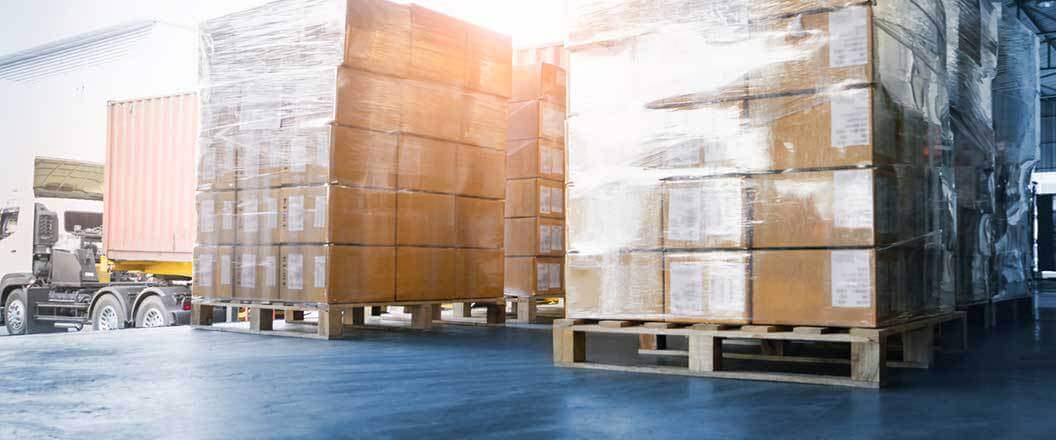
Before getting into the solutions to tender rejection, it’s important to clarify what it is. The rate of tender rejection refers to the percentage of loads that carriers refuse to transport. When a shipper has a contracted load, they seek out a carrier who can transport it for them. Unfortunately, these contracted loads can be rejected by carriers for one reason or another.
When a contracted load has been refused, it’s sent to what’s called the spot market. The spot market displays spot rates, which are the real-time prices to ship a load on the spot. Rates for contracted loads on the spot market are often higher than they would be if they were accepted by a carrier beforehand.
Not only will spending money on a spot rate cost you more, but you’ll also have to account for other factors like fuel surcharges that could cause you to spend more to ship your freight.

As we briefly mentioned, carriers reject loads for a variety of reasons. In some instances, carriers have no choice but to refuse a load due to circumstances that they’re faced with on their end. Other times, carriers will reject loads due to mistakes made by shippers themselves.
Tenders are often rejected for these reasons:
Mistakes made on the request for proposal (RFP) that you send to a carrier can cause rejection. When it comes to filling out the RFP, you need to be sure that you fill it out correctly. Carriers need to know what they’re getting into before they accept the load.
Another mistake that many shippers make when they complete an RFP is that they tend to focus on rates, specifically low rates. Letting the carrier know what they’ll be paid is important, but so are other details about the shipment. This includes things like:
Many carriers plot out their routes for pickup and delivery. Others will call ahead before pickup to verify the address and determine if there are any hazards to trucks in the area. If a carrier discovers that a delivery or pickup location is not suitable for a truck to travel, they might decide to reject the shipment.
Some hazards that will cause carriers to reject a contract are:
Narrow streets aren’t great for truckers because it gives them little room to operate and turn their vehicles around. As for dirt roads, truckers that unload their own freight will struggle to move their pallet jack across this terrain. Lastly, low-hanging power lines and trees can scrape a truck and trailers, as well as obscure the view of the truck driver.
To avoid any problems that could arise from operating a truck in areas like these, carriers will reject these types of contracts in favor of easier ones.
A short lead time is something that causes many carriers to turn down freight shipments. Short lead times mean that carriers have to work harder to get shipments to their destination in the specified time frame.
Carriers want to avoid having a truck out on the road without a shipment. To avoid this problem, they often opt for shipments that have longer lead times. Carriers accept these types of loads more often because it helps them ensure that their truckers always have a shipment to move.
Even if you do everything right, there’s a chance that a carrier you’ve chosen will reject your load. This tends to happen when your carrier is at maximum capacity. Different carriers have different amounts of trucks in their fleet.
Essentially, it comes down to supply and demand. Some carriers simply don’t have the number of trucks to keep up with contracts that are coming in. This leaves them with no other option than to reject the tenders whose services they can’t fulfill.
A carrier can reject a contract simply because they’re not getting paid enough to cover their costs. Every carrier operates on a different budget. Therefore, what might be a good price for one carrier might not be the same for another. That said, if you notice that you’re constantly being denied by carriers, chances are you might be offering enough compensation to carriers to take on your contract.
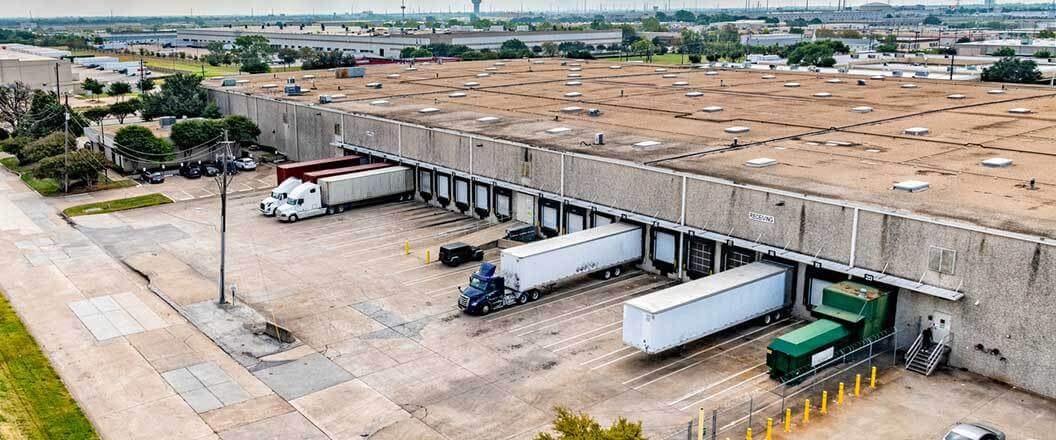
Although there are many different reasons that your tender can be rejected, there are also numerous ways you can reduce your tender rejection rate. Preventing tender rejection will help you book loads faster, saving time and money.
The best way to write a great RFP is to be specific and provide details about your load. Carriers need accurate information to decide whether or not they want to take on responsibility for transporting a load. Provide details like whether or not live load and unload services are needed, driver assists that are used, and other details.
Detailed information about your freight is also necessary. A detailed RFP will help reduce the likelihood of your contracts being rejected by potential carriers. This includes information that we discussed earlier, such as pickup and delivery location.
One method that many tenders use to reduce their rejection rates is by investing in transportation forecasting. This type of technology is useful because it can give tenders the ability to predict what freight prices will be in the future.
Not only can transportation forecasting do this, but it can also help shippers determine what carrier capacity will be. With the aid of transportation forecasting, you can find the best times to book contracted loads. This will help you get ahead of your competition and dominate the supply chain.
As we discussed above, carriers reject loads that have hard-to-operate pickup and delivery locations. The best way to avoid this problem is by picking places that make it easier for the carrier to load and unload your freight.
This can mean meeting the carrier at a different location where they have room to operate their truck and load the freight into their trailer. Other options include providing the carrier with an alternate route to the pickup and delivery point.
Carriers tend to prefer contracts for lanes that are consistently used. The more consistent that a lane is, the more consistent the rates will be for it. Certain shipping lanes don’t have these features to them. Freight lanes that you should avoid are ones that only have freight traveling on them once a week or seasonal ones. Carriers are more likely to reject contracts for lanes like these.
Carriers need to make a profit on their operations and as a shipper, you need to make sure that you’re not paying too much for shipments. One way to account for this is by checking fuel prices. The price of fuel has a strong impact on the rates that carriers desire.
You can use current fuel prices to calculate a rate that will be attractive to carriers while also not hurting your wallet. To make the rate even more attractive, make sure that it’s clear in your contract that rates will be adjusted as fuel rates fluctuate.
The table below shows the average freight rates for dry van, reefer and flatbed shipping. Use these averages as a starting point for a good rate, then account for fuel prices.
| Trailer Type | Average Rates |
| Dry Van | $2.76 per mile |
| Reefer | $3.19 per mile |
| Flatbed | $3.14 per mile |
Our articles on dry van shipping rates and flatbed shipping rates will be able to give you further details on costs.
If you struggle with your tender rejection rates and don’t have the time or resources to improve them, then USA Truckload, powered by R+L Global Logistics, can help. We serve as the middleman between shippers and small, but reliable carriers all over the country.
Through our network of partnered carriers, we can find one that will transport just about any type of goods you need to get shipped. It doesn’t matter if it’s heavy haul, hazmat, refrigerated, or flatbed, our partners can do it all.
Fill out your quote today and finally get the carrier that you deserve.
Key Takeaways
The American railroad system has a proud history in the United States. Once a symbol of ingenuity and strength, the railroad industry has struggled in recent decades to meet rising economic demands and retain qualified railroad workers.
After scaling back or completely stopping some rail services in preparation for a strike, an initial agreement was reached. While we seem to have avoided a nationwide strike by railroad union workers right now, this potential crisis has highlighted how fragile our current supply chain status remains.
A final ratification vote still needs to pass, but economists are sighing in relief that a major transport crisis is no longer an immediate danger. With supply chains still normalizing after major disruptions during the Covid-19 pandemic, a railroad strike had the potential to create major issues.
Freight rail moves over 30% of goods in the U.S. according to the Bureau of Transportation Statistics (BTS). At a minimum, a strike in September would have impacted the agricultural industry’s fall harvest season and affected the availability of many consumer goods.
Has the threat of a rail strike gone away completely? How do suppliers manage in the event of a work stoppage? Is there anything shippers can do to prepare for a full strike?
We are here to answer these questions and provide you with some practical solutions to protect your supply chain.

The rail industry has taken some hits in recent decades, many of which have affected rail workers directly.
According to most sources, working conditions and compensation were harsh enough to cost the industry about 40,000 workers between 2018 and 2020. Some of this was due to cuts made by the companies themselves due to lower volumes of freight. Others were due to a practice called PSR (precision scheduled railroading).
Many companies adopted PSR practices as a way of making rail more efficient by focusing on high-volume lanes and cutting back on or eliminating less efficient routes. However, the practice has also led to fewer available routes and worker layoffs.
Long-standing concerns from workers at all levels of the industry included:
However, when the Covid-19 pandemic hit, railroad carriers saw increased business as shipping habits began to change. When the two biggest rail companies reported record profits at the end of 2021, it seemed workers had enough.
The unions brought some of the following demands to each major rail company.
The first deal presented by the freight companies in August used recommendations from the Presidential Emergency Board (PEB) and was rejected outright. A strike was called for and was set to take place Friday, September 17 at 12:01 AM.
Under pressure by the Biden administration to reach an agreement before the pre-set “cooling off” period expired, another deal was made in discussions brokered by Biden’s appointed Labor Secretary.
After the last two unions holding out against the companies accepted this latest tentative agreement, a ratification process began.
Officially, the strike has been delayed until September 29, 2022. Individuals and companies on both sides are hoping for a resolution that meets everyone’s needs and prevents such an event entirely.

The original call to strike came from unions representing workers at freight rail lines, not passenger lines. However, most passenger trains still travel on tracks maintained by freight rail companies.
The close connections between unions and the various parts of the rail industry mean a strike at even one rail company, or by members of just one union, can affect most of the system.
For example, Amtrak, a major passenger line, was preparing to shut down because 97% of its trains run on freight-owned lines.
Major freight railroad companies that would feel immediate impact included:
BNSF Railway, which is owned by Berkshire Hathaway Inc., and Union Pacific account for about 44% of rail workers in the industry. These two companies move millions of dollars worth of goods on a daily basis.
There were 12 unions involved in negotiations, but a holdout from two of the largest was initially delaying the tentative agreement. These two, the International Association of Sheet Metal, Air, Rail, and Transportation Workers (SMART-TD) and the Brotherhood of Locomotive Engineers and Trainmen (BLET), represent members in almost every major rail company.
In the end, even a small strike could affect all or most train lines.
Economically speaking, a major stoppage of long-distance rail service impacts all levels of the national supply chain. The last railroad strike that took place 30 years ago only lasted two days and was carried out by only one rail line. Even so, an article from the Washington Post reported that it costs the nation nearly $1 billion a day in lost wages and products.
In current times and with a nation already dealing with transportation delays, a multi-rail shutdown could cost the American economy upwards of $2 billion a day - as a start.
Some industries would be impacted more immediately than others.
Shippers in all industries have every right to worry about how their business could be affected. The trickle-down effect of a strike could have lasting effects. The American Association of Railroads tracks weekly, monthly, and annual movement of commodities moved by rail throughout the U.S., Mexico, and Canada.
One look at their numbers reveals just how much of an impact a work stoppage or delay could mean for these industries.
| Commodity | Number of Boxcar Loads |
| Cars & Auto Parts | 924,260 |
| Chemicals | 2,206,940 |
| Coal | 3,340,690 |
| Grain & Soybeans | 1,519,250 |
| Crushed Stone | 752,950 |
| Metallic Ores | 792,060 |
| Pulp & Paper | 617,230 |
| Steel & Metals | 501,280 |
Source: American Association of Railroads
Some businesses were dealing with just the effects of a proposed strike. For example, freight lines that moved HAZMAT materials stopped accepting packages and others refused to pick up containers from ports. While these activities have now been resumed, even those delays created backlogs in many chemical plants and ports.
While no solution is perfect, there are some practical steps you can take to prepare for a labor strike or any other event that impacts rail and its role in the supply chain.
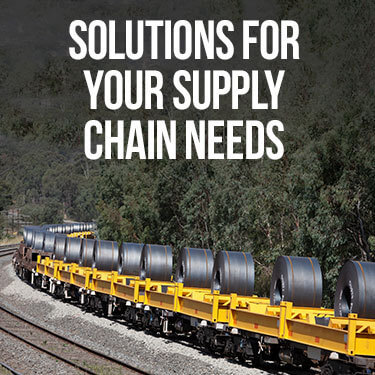
If trains stopped working tomorrow or a year from now, would you have a plan for moving forward? If we’ve learned nothing else in the logistics industry in the last two and half years, it’s that you should never count on just one form of shipping.
At USA Truckload Shipping, we’ve come to realize that our clients need practical solutions to address ongoing concerns. There will always be threats to the supply chain. If it isn’t a railroad strike or a global pandemic, it could be severe weather or some as-yet unforeseen disaster.
We’ve worked hard to make sure clients have access to more than just a shipping contingency bandage - we offer practical solutions that you can adopt and embrace long-term.
Even as other companies have reduced or cut services, we are moving forward with expansion plans around the country to better serve you.
Our network of carriers comes from all parts of the country and we’ve made it a goal to keep expanding and add even more line haul capacity.
Just take a look at some of the latest developments:
Losing out on a rail service doesn’t have to mean the end of your business. Branching out to take advantage of opportunities in trucking services now might help you avoid setbacks later on.
Learn more about how using rail drayage can help reduce freight transport costs.
Clients come to us with a variety of goods they need to ship all across the country. From high-value electronics to imported Italian tile, our drivers have seen it and hauled it.
To make sure there is nothing drivers can’t handle, we make sure each one is also HAZMAT certified.
Ahead of the proposed strike, rail services began refusing various loads of HAZMAT products.
These included crucial products, such as chemicals for water purification and fertilizers for the agricultural industry.
If you have hazardous materials that are stuck en route, you need the services of an experienced company that has drivers where you need them and who are capable of hauling a variety of materials.
Railways do offer crucial services. There is a reason that over 30% of U.S. freight relies on the railroad. At the end of the day though, trains just can’t go everywhere that a truck can.
The versatility of truckload services means that we can provide a service for almost every shipping need.
As a country, we may have once taken for granted our ability to keep goods on store shelves and supplies in motion. At USA Truckload Shipping we know that not every situation can be planned for, but it doesn’t stop us from trying.
Your shipments matter to you and they matter to our economy at large. No matter what happens with U.S. railroad services, you need solutions you can rely on now and going into the future.
The freight industry and its workers are the real backbone of the supply industry. They should be well compensated and treated well. Unfortunately, sometimes that takes extreme action.
Strikes of railroad workers, or any supply chain employment sector, can impact all of us, but especially shippers. Plan ahead for the expected and the unexpected by relying on a service you can count on.
USA Truckload Services believes in providing the best quality services to our clients each and every time. We’ll talk with you about your personal or business shipping needs.
Call us today at (866) 353-7178 to speak with an experienced representative who wants to help get your shipment to where it does the most good. Already know what you need moved? Fill out an online form and request a truckload quote or look into our rail services now.
R+L Global Logistics
315 NE 14th St., Ocala, FL 34470